
The synthetic peptide research compound known as Melanotan-2 is studied in the areas of molecular biology, peptide chemistry, and melanocortin receptor research. This peptide compound is used as an experimental peptide model in the research of receptor interactions, cellular signalling and biological communication processes.
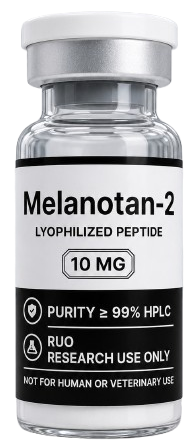
Certificate of Analysis
Batch PA-0068 — 10mg
View COA
Research Grade Quality
Independently Tested
Melanotan-2
$69.99
Size / Strength
HPLC Verified
COA Included
Fast Dispatch
Discreet Shipping
100% Quality Guarantee
Every batch of Melanotan-2 is independently third-party tested. 30-day money-back guarantee — no questions asked.
Melanotan-2 – Research Overview
Firstly developed as a result of the research on melanocortin pathways, the Melanotan-2 became the object of the laboratory investigation because of its well-defined peptide structure and molecular targets interaction. The research of this compound is associated with the study of peptide-receptor activity and biochemical processes in the laboratory.
The product Melanotan-2 10mg at Peptides Australia is available only as a Research Use Only (RUO) laboratory reagent. Each batch of this laboratory reagent is delivered with the documentation including analytical test data and COA.
Research Highlights
- Independent Laboratory Tested
- Batch-Specific Certificate of Analysis
- Australia-Wide Dispatch
- Research Use Only
- HPLC Tested Peptide Material
What is Melanotan-2?
Melanotan-2 is an artificially-created peptide that has been studied under the scope of melanocortin studies.
It is a type of substance that has been investigated regarding its relation to the function of melanocortin receptors, which belong to a larger class of biological signaling systems.
Melanocortin studies concern the interaction of peptides with certain receptors in the process of biological signaling.
Investigations of Melanotan-2 include:
- Structure of the peptide
- Interaction with receptors
- Signalling mechanisms
- Cellular signalling pathways
Currently, scientific research into this compound does not involve its practical application.
Scientific Background
The melanocortin system is a biological signaling pathway involving hormones and receptors.
Scientific research into this biological system helps to develop knowledge regarding:
- Receptors
- Signal transduction
- Molecular interactions
- Cellular reactions
Artificial peptides like Melanotan-2 are used in laboratory investigations as a research tool.
Studies of melanocortin-related substances have resulted in development of knowledge in many areas of science, including molecular biology and endocrinology.
Peptide Classification
Melanotan-2 is regarded as a synthetic peptide. Peptides consist of short chains of amino acids joined by peptide bonds. The unique combination of amino acids determines the molecular features of the peptide. The reason why scientists are researching synthetic peptides is that they can examine the following aspects:
- Structure of molecules
- Stability of peptides
- Interaction with receptors
- Biological signal transmission
Molecular Characteristics of Melanotan-2
Understanding peptide composition and structure is an important part of laboratory research.
Melanotan-2 has a defined cyclic peptide structure that researchers analyse to understand its chemical characteristics and molecular behaviour.
Stability Issues
Environmental factors may affect peptide stability.
Scientists usually take into account:
- Temperature conditions
- Moisture content
- Light conditions
- Packaging
- Storage time
Sustained proper storage conditions help preserve characteristics of research material.
Scientists may review related resources:
- About Peptide Purity
- Peptide Storage Conditions
- How to Read Certificate of Analysis
Why Researchers Study Melanotan-2
Interest in Melanotan-2 in science comes from use of Melanotan-2 as an experimental peptide model of studies on melanocortin signal transduction.
Research concerns molecular mechanisms and not the development of therapy, cosmetics, and consumer use.
Melanocortin Receptors Research
Melanocortin receptors are a group of receptors which are researched in molecular biology extensively.
In this area scientists explore the following issues:
- Ligands' interaction with receptors
- Cellular signaling
- Communication at molecular level
- Activation mechanism of receptors
Melanotan-2 is used as an experimental compound in this area of receptors' research.
Cellular Signaling Research
Cellular signaling is the term that designates cell communication using molecular signals.
In this area scientists explore the following issues:
- Receptors' information transfer
- Molecules' interaction within cells
- Cellular response regulation
Synthetic peptides are used by scientists as tools to study this complex biological process.
Research Context on Pigmentation Biology
The melanocortin pathways are related to research in the area of pigmentation biology and cellular processes associated with melanocyte-related pathways.
Scientists explore these mechanisms to learn:
- Cellular signaling
- Molecular regulation
- Interactions of biological pathways
These investigations are performed for scientific purposes and not represent approved applications of cosmetics or therapy.
Experimental Research Models
Melanotan-2 could be tested in a laboratory setting via such methods as:
- Molecular analysis
- Receptor studies
- Cellular research models
- Analytical characterisation
The goal of such research is the development of knowledge about peptide biology and molecular signaling.
Manufacture and Quality Specifications
The manufacture of peptides that can be used in experiments should involve controlled procedures, verification and documentation of the manufacturing process.
Melanotan-2 10mg is manufactured as synthetic peptide research material by means of peptide chemistry.
The quality-oriented peptide manufacture process includes several steps to allow confirmation of:
- Peptide identity
- Molecular uniformity
- Analytical characteristics
- Batch traceability
All of these give researchers additional information when assessing laboratory peptide materials.
Solid Phase Peptide Synthesis (SPPS)
Peptides for research purposes are typically synthesized by means of Solid Phase Peptide Synthesis (SPPS).
It is an established peptide chemistry technique, which allows building peptides from amino acids in a definite sequence.
Production steps usually include:
- Peptide sequence design
- Amino acid assembly
- Cleavage and further processing
- Purification
- Analysis
- Lyophilisation
- Batch documentation
In this way, researchers get access to peptides with particular molecular properties.
Purification Process
Following synthesis, purification occurs as a step that will facilitate the separation of the desired peptide from any undesirable components.
The purpose of purification includes:
- Undesired incomplete peptide sequences
- Synthesis components
- Other related compounds
- Process impurities
Purification in a controlled manner can enable better analysis.
Lyophilisation Process
Following purification and analysis, Melanotan-2 will be provided in lyophilized powder form.
This process is characterized by controlled freezing and drying, which is aimed at reducing moisture content.
Advantages of lyophilized research peptides include:
- Reduction in moisture content
- Consistency in storage
- Better laboratory documentation
- Controlled handling processes
Scientists should observe laboratory protocols while handling lyophilized peptides.
Research Use Only (RUO)
Peptides Australia provides Melanotan-2 10mg as a laboratory RUO only material.
The purpose of this product is only for:
- Research purposes
- Laboratory testing
- Educational research
- Experimentations
Melanotan-2 is not FDA-approved for any therapeutic, cosmetic, diagnostic, veterinary or human use in Australia.
Research Material vs. Approved Material
There is a difference between peptides used in research and approved medications/consumer goods.
The process of evaluation of an approved product requires:
- Assessing safety
- Conducting clinical investigation
- Reviewing manufacturing
- Submitting an application
Peptides are not considered pharmaceutical products or cosmetics.
Responsible Laboratory Research
The use of RUO material requires researchers and organisations to ensure compliance with:
- Institutional guidelines
- Laboratory safety practices
- Research governance guidelines
- Applicable laws in Australia
Melanotan-2 must only be used in appropriate laboratory settings by competent personnel.
Reasons to Select Peptides Australia
Peptide research needs clear documentation, accurate information and quality laboratory material.
The company provides documentation suitable for:
- Universities
- Biotechnology firms
- Research laboratories
- Scientific institutions
Batch Specific Certificate of Analysis
The batch specific COA offers product-related analytical information.
This is important for:
- Laboratory documentation
- Material verification
- Research traceability
Independent Laboratory Testing
Analytical testing gives researchers information about:
- Identity of the peptide
- Purity of the peptide
HPLC Tested Peptides
The HPLC testing offers information about the peptide composition and purity.
Researchers may check the analytical documentation to confirm the laboratory peptide materials.
Secure Packaging
Correct packaging helps to ensure protection of the lyophilized research materials.
Australia Wide Dispatch
Accurate dispatch ensures that:
- Research institutions
- Universities
- Biotechnology firms
- Scientific laboratories
Researchers considering buying Melanotan-2 in Australia need to check the product specifications, availability of Certificate of Analysis, analytical testing information and Research Use Only status.
Research Use Only
This product is intended solely for laboratory research purposes. Not for human consumption.
Melanotan-2 – Storage & Handling
Storage and Laboratory Handling Procedures
Proper storage and handling practices are crucial for preserving peptide research materials.
Melanotan-2 is supplied in the form of lyophilised powder and must be handled properly in the laboratory.
Temperature Aspects
Researchers must take into account the right storage conditions to reduce unnecessary changes in temperature.
Factors that need to be taken into consideration include:
- Right storage conditions
- No temperature changes
- Protection from temperature variations during transportation
Moisture Protection
Peptides in lyophilised form need to be shielded from excessive moisture exposure.
Some laboratory good practice includes:
- Sealing containers properly
- Avoiding excessive humidity exposure
- Adhering to the supplier’s storage instructions
Light Protection
Peptide materials might need to be shielded from direct light exposure.
Proper storage conditions help ensure the consistency of the research materials.
Laboratory Documentation
Laboratories usually keep documents about:
- Lot numbers
- Storage conditions
- Product specifications
- Laboratory protocols
Proper documentation helps create a quality laboratory environment.
Researchers might find other helpful sources of education:
- Peptide Storage Guidelines
- Certificate of Analysis Explanation
- Laboratory Quality Control
Melanotan-2 – Technical Specifications
Every batch of Melanotan-2 is independently analysed before dispatch. The values below describe the current research batch.
| Product Name | Melanotan-2 |
|---|---|
| CAS Number | 121062-08-6 |
| Molecular Formula | C₅₀H₆₉N₁₅O₉ |
| Molecular Weight | 1024.18 g/mol |
| Quantity / Strength | 10mg |
| Purity | ≥ 99% (HPLC) |
| Form | Lyophilised Powder |
| Appearance | White Lyophilised Powder |
| Batch Number | PA-0068 |
| Storage Conditions | 2°C-8°C (Refrigerated) |
| Category | Reproductive & Sexual Health |
| Intended Use | Research Use Only — not for human consumption |
Melanotan-2 – Certificate of Analysis
Every batch of Melanotan-2 is independently tested before dispatch. View the full COA for the current batch below.
Certificate of Analysis (COA)
Batch Number PA-0068
≥ 99%
Purity
HPLC
Confirmed
Identity
Mass Spec
Pass
Heavy Metals
ICP-MS
| COA Information | Purpose |
|---|---|
| Product Name | Confirms peptide identification |
| Batch Number | Provides traceability |
| Purity Results | Shows analytical evaluation |
| Testing Method | Identifies laboratory techniques |
| Identity Testing | Supports molecular confirmation |
| Quality Review | Documents assessment |
Batch Traceability and Quality Documentation
Batch traceability is one of the key features of responsible research peptide supply.
Documentations for a batch of peptides may contain:
- Identification of the product
- Batch number
- Analytical results
- Test method
- Storage instructions
Proper documentation enables universities, biotech companies, and research labs to document materials used in scientific research.
Purity Testing & Certificate of Analysis (COA)
Analytical testing provides data on peptide identity, purity, and quality attributes.
When choosing research peptides, laboratories usually look at:
- Purity data
- Analytical testing data
- Identity information
- Batch data
High Performance Liquid Chromatography (HPLC)
High Performance Liquid Chromatography (HPLC) is one of the most popular analytical methods for assessing the purity of peptides.
HPLC separates the constituents of a sample and produces a chromatogram that is then analyzed by researchers.
When testing Melanotan-2 research peptides, HPLC testing can give information on:
- Peptide purity percent
- Related substances
- Composition of the sample
- Batch consistency
HPLC is popularly used in peptide chemistry, biotechnology, and academic laboratories.
Those interested in analytical testing methods can learn more about:
- Understanding Peptide Purity
- HPLC versus LC-MS Testing
- Third Party Laboratory Testing
LC-MS Identity Testing
Liquid Chromatography – Mass Spectrometry (LC-MS) is one of the methods used to confirm peptide identity.
LC-MS testing provides information on:
- Molecular weight
- Expected peptide identity
- Structure properties
Combining analytical methods will help researchers better understand laboratory peptide materials.
Certificate of Analysis Explained
A Certificate of Analysis (COA) is a batch-specific quality document containing analytical information about a research peptide.
A typical COA may include:
COA allows researchers to assess product specifications before starting their laboratory work.
Researchers who plan to buy Melanotan-2 peptides in Australia need to look at Certificate of Analysis documents and other related information before deciding on the laboratory peptides.
Research Disclaimer
For Research Use Only — Not for Human Consumption
This content is provided for educational, scientific and research-information purposes only. It does not provide medical advice, treatment recommendations or personal dosage instructions. Available evidence concerning Melanotan-2 includes preclinical research and ongoing or completed clinical investigations. Further research is required to better understand its safety, pharmacology and potential efficacy for specific research applications.
- Not for human or veterinary use
- No claims are made regarding safety or efficacy in humans
- Must be handled with appropriate laboratory safety equipment
- Purchaser assumes all responsibility for legal, compliant use
References
5 sources- 1Dorr RT, Lines R, Levine N, et al. Evaluation of Melanotan-II, a Superpotent Cyclic Melanotropic Peptide in a Pilot Phase-I Clinical Study. Life Sciences. 1996;58(20):1777-1784.PubMed: https://pubmed.ncbi.nlm.nih.gov/8637402/
- 2Wessells H, Gralnek D, Dorr R, Hruby VJ, Hadley ME, Levine N. Effect of an Alpha-Melanocyte Stimulating Hormone Analog on Penile Erection and Sexual Desire in Men with Organic Erectile Dysfunction. Urology. 2000;56(4):641-646.PubMed: https://pubmed.ncbi.nlm.nih.gov/11018622/
- 3Wessells H, Levine N, Hadley ME, Dorr R, Hruby V. Melanocortin Receptor Agonists, Penile Erection, and Sexual Motivation: Human Studies with Melanotan II. International Journal of Impotence Research. 2000;12(Suppl 4):S74-S79.PubMed: https://pubmed.ncbi.nlm.nih.gov/11035391/
- 4Habbema L, Halk AB, Neumann HAM. Risks of Unregulated Use of Alpha-Melanocyte-Stimulating Hormone Analogs: A Review. International Journal of Dermatology. 2017;56(10):1059-1067.PubMed: https://pubmed.ncbi.nlm.nih.gov/28703325/
- 5Australian Government, Therapeutic Goods Administration (TGA). Don't Risk Using Tanning Products Containing Melanotan. Therapeutic Goods Administration. 24 January 2025.TGA: https://www.tga.gov.au/news/blog/dont-risk-using-tanning-products-containing-melanotan
Citations are provided for research reference and open in a new tab. Listing a study does not imply it evaluated this specific product.
Melanotan-2 – Frequently Asked Questions
Researchers Also Purchase


Why Researchers Choose Us
Research-Grade Quality. Trusted by Researchers Across Australia.
Learn About Our QualityDiscreet Packaging
Fast Australia-Wide Delivery
Expert Support
30-Day Money Back