
Reproductive & Sexual Health
This category collects the peptides Australian research laboratories use to study neuroendocrine control of reproduction, melanocortin signalling and central nervous system regula…


Reproductive and Sexual-Health Pathway Research Peptides
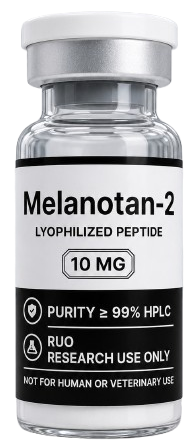
This category collects the peptides Australian research laboratories use to study neuroendocrine control of reproduction, melanocortin signalling and central nervous system regulation of sexual behaviour. Current products include Kisspeptin-10, PT-141 (Bremelanotide) and Melanotan-2. All items are supplied as laboratory reference materials for research use only.
Kisspeptin-10 is a fragment of the KISS1 gene product and is one of the most important research tools for studying the neuroendocrine control of the hypothalamic-pituitary-gonadal axis. PT-141 is a synthetic melanocortin receptor agonist that has been studied for its action on central nervous system pathways of sexual arousal. Melanotan-2 is a synthetic analogue of the natural melanocyte stimulating hormone and is used in research on melanocortin receptor pharmacology and pigmentation biology.
Where these peptides fit in research
The kisspeptin system is one of the most active areas of neuroendocrine research worldwide. Australian laboratories use Kisspeptin-10 in studies of GnRH pulse generation, puberty onset in rodent models, and receptor-binding assays in pituitary cell cultures. PT-141 is used in research on central melanocortin signalling and, in some laboratories, as a comparator in assay validation. Melanotan-2 appears in melanocortin receptor pharmacology and pigmentation research, and it is often used as an analytical reference standard.
Because these peptides interact with important neuroendocrine pathways, study protocols usually involve careful dose-response design and downstream hormone measurement. Our team can supply the batch-specific certificate of analysis to support the documentation trail that ethics committees and grant reviewers typically require.
Manufacturing and quality control
Every batch is synthesised by solid-phase peptide synthesis, purified by reverse-phase HPLC, and released only after independent identity and purity testing. Our specification is a minimum of ninety-nine percent HPLC purity. Identity is confirmed by LC-MS against the theoretical molecular weight of the sequence. Each vial carries a batch number that ties directly to the certificate of analysis, so a laboratory can trace any experimental result back to a specific production lot.
Products are supplied lyophilised in sealed vials and shipped from Australia in insulated packaging. Refrigerated storage at two to eight degrees Celsius is recommended for short-term use, with frozen storage at minus twenty degrees Celsius for longer periods. Reconstitution guidance is printed on the certificate of analysis and includes the solvent and concentration recommendations for that specific batch.
Choosing the right peptide for your study
The selection depends on the pathway your team is investigating. Kisspeptin-10 is the standard choice for HPG-axis research and studies of GnRH pulsatile secretion. PT-141 fits research on central melanocortin receptors and the neural circuitry of sexual behaviour. Melanotan-2 is often selected when the study is focused on melanocortin receptor pharmacology, pigmentation biology or comparator assay work.
If a research team requires a peptide that is not currently listed, or a bulk quantity for an extended study, our team can quote and dispatch specific research compounds on request. Contact us through the enquiry form with the peptide name, sequence, quantity and vial size, and we will confirm availability and lead time.
Documentation and regulatory position
Each batch of reproductive-category peptide is released with a certificate of analysis. The certificate records the peptide name, sequence, batch number, HPLC purity, LC-MS identity confirmation, appearance and recommended storage conditions. This documentation is designed to satisfy the record-keeping standards of Australian universities and research institutes.
All products in this category are supplied strictly for laboratory research use only. They are not medicines, they are not intended for human or veterinary use, and no therapeutic claims are made. Purchasers must have a legitimate scientific research purpose and must handle the peptides in accordance with their own institutional laboratory safety and record-keeping procedures.
Common questions
What solvent do you recommend for Kisspeptin-10 reconstitution? Bacteriostatic water is the standard diluent for Kisspeptin-10 in most published preclinical protocols. Some researchers use 0.6% acetic acid to improve initial solubility of the decapeptide before diluting further with bacteriostatic water. Both options are stocked in our lab supplies section.
How do PT-141 and Melanotan-2 differ? Both act on the melanocortin receptor family, but PT-141 (bremelanotide) shows higher selectivity for MC4R, which is the receptor most linked in the literature to sexual arousal pathways. Melanotan-2 is a broader melanocortin agonist with additional MC1R activity affecting pigmentation.
Is Kisspeptin-10 stable once reconstituted? Reconstituted Kisspeptin-10 is best used within two to three weeks when kept refrigerated at 2 to 8 degrees Celsius. For longer storage, aliquot and freeze in single-use portions. The decapeptide is sensitive to repeat freeze-thaw cycles, which reduce measurable receptor activity.
What syringe format suits low-dose melanocortin work? 0.3 or 0.5 mL insulin syringes with a 29 to 31 gauge needle give the volume accuracy needed for the low microgram doses used in Melanotan-2 and PT-141 study protocols. Ordering matched syringes at the same time reduces sourcing variables between runs.
References
1 source- 1PubMed — research literature for this areaPubMed: https://pubmed.ncbi.nlm.nih.gov/?term=peptide%20sexual%20reproductive%20health
Citations are provided for research reference and open in a new tab. Listing a study does not imply it evaluated this specific product.