
Weight Loss
The weight-loss category groups the incretin-family research peptides that Australian laboratories most often need to keep on hand.
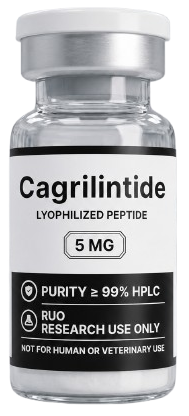
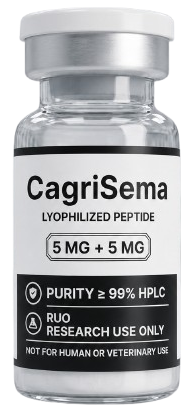
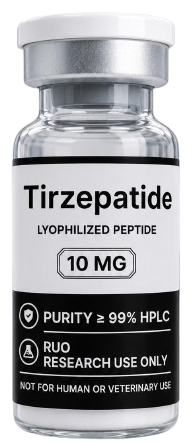
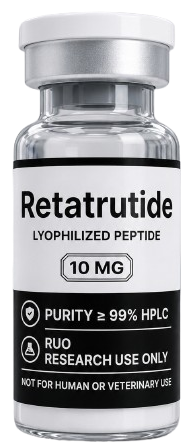
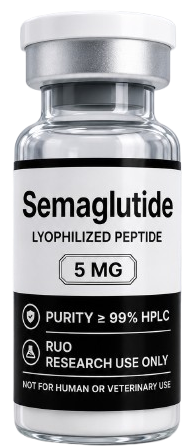
Weight-Management Research Peptides
The weight-loss category groups the incretin-family research peptides that Australian laboratories most often need to keep on hand. These are synthetic analogues of the gut and pancreatic peptides that regulate appetite, gastric emptying, insulin release and blood-glucose control. Every product listed here is intended for controlled laboratory research and comes with a batch-specific certificate of analysis.
Semaglutide, Tirzepatide, Retatrutide and Cagrilintide are the four peptides most widely studied for their effects on appetite signalling and metabolic pathways. Each represents a different mechanism of action. Semaglutide is a GLP-1 receptor agonist. Tirzepatide adds GIP receptor activity to that same GLP-1 pathway. Retatrutide is a triple agonist that also engages the glucagon receptor. Cagrilintide is an amylin analogue that acts through a separate satiety pathway and is often studied alongside semaglutide in combination research. Choosing the correct peptide for a study depends entirely on which receptor systems the research team wants to observe.
Why researchers order these compounds
Peptide-based metabolic research has become one of the fastest-moving fields in preclinical science, and Australian universities, contract research organisations and independent laboratories all require reliable supply. Common study areas include energy balance, hepatic glucose output, gastric emptying rate, adipose signalling, food-intake behaviour in animal models, and receptor-binding assays. The peptides in this category are also used in analytical method development, where researchers need certified reference material to validate mass-spectrometry or HPLC procedures.
Because the compounds are structurally similar to naturally occurring peptides, they degrade rapidly if handled poorly. Our team supplies each vial in lyophilised form so that laboratories can reconstitute the peptide only when a study begins, then store any unused solution in accordance with their own procedures.
How our weight-management peptides are prepared
Every batch of these peptides is manufactured by solid-phase peptide synthesis, purified by reverse-phase HPLC, and released only after independent identity confirmation. Purity testing is performed by HPLC and identity is confirmed by mass spectrometry. Our specification for this category is a minimum of ninety-nine percent purity, which we publish on the certificate of analysis alongside the batch number, appearance, moisture level and analytical method summaries.
The materials are shipped from Australia in insulated packaging to protect stability during transit. If a laboratory requires cold-chain confirmation, our support team can provide dispatch temperature records on request. Storage on arrival is straightforward. Lyophilised vials should be kept at two to eight degrees Celsius, protected from light and moisture, and used according to the supplier storage guidance.
Compliance and responsible handling
All items in the weight-loss category are supplied strictly for laboratory research use only. They are not medicines, they are not intended for human or veterinary use, and no therapeutic claims are made. Australian purchasers must have a legitimate scientific purpose, and staff handling the peptides should follow their own institutional laboratory safety and record-keeping requirements.
If a research programme requires a specific dose that is not currently in stock, or a bulk quantity, our team can quote and dispatch to order. Contact the research support team through the enquiry form and include the peptide name, quantity, and preferred vial size. Most special requests can be fulfilled within one to two weeks of receiving payment confirmation.
What to consider before you order
A short checklist helps most first-time buyers. First, confirm the peptide molecule matches the sequence used in the published literature you plan to reference. Second, decide on the vial size you need for the length of your study, since repeated freeze and thaw cycles reduce peptide integrity. Third, plan the reconstitution solvent and volume in advance so that stock solutions match the assay concentration your protocol requires. Fourth, keep the certificate of analysis attached to your laboratory notebook or LIMS record for the duration of the project.
New products are added to this category as manufacturing capacity allows. If you are researching a peptide that is not listed, or you need documentation for a grant application, get in touch with the team. We will confirm whether a suitable batch is available or can be scheduled.
Common questions
Which peptide should I start with for GLP-1 receptor work? Semaglutide is the most widely characterised single-agonist option and has the largest published dataset for benchmarking. Most researchers begin there before moving to Tirzepatide (dual GIP/GLP-1) or Retatrutide (triple agonist), where the receptor profile and study design get more complex.
What is Cagrilintide typically paired with? Cagrilintide is an amylin analogue and is often studied alongside Semaglutide (the CagriSema combination) in preclinical models looking at appetite pathways and body composition. It works through a different receptor system, so pairing lets researchers analyse additive effects on food intake.
How stable are these peptides once reconstituted? When kept refrigerated at 2 to 8 degrees Celsius, most incretin peptides in this range hold usable potency for around 28 to 30 days after reconstitution with bacteriostatic water. Freeze-thaw cycles should be avoided. Always check the individual product page for peptide-specific storage windows.
Do you supply reconstitution consumables? Yes. Our lab supplies section stocks bacteriostatic water, insulin syringes and acetic acid so researchers can order everything in one shipment. Keeping consumables from the same supplier helps standardise procedure across a study and reduces sourcing variables when repeat orders are required.
References
1 source- 1PubMed — research literature for this areaPubMed: https://pubmed.ncbi.nlm.nih.gov/?term=GLP-1%20weight%20management%20peptide
Citations are provided for research reference and open in a new tab. Listing a study does not imply it evaluated this specific product.