
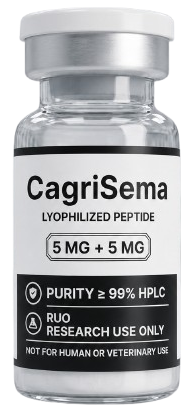
CagriSema is an experimental peptide combination that has generated scientific interest in the fields of metabolic studies, peptide science, endocrinology, and molecular signalling research. CagriSema comprises Cagrilintide, which is an amylin analogue, and Semaglutide, which is a GLP-1 analogue, providing a research system for the study of interactions between multiple peptide signalling pathways.
Batch Tested
Certificate of Analysis
Batch PA-0021 — 5mg + 5mg
Research Grade Quality
Independently Tested
CagriSema
$265.99
Size / Strength
HPLC Verified
COA Included
Fast Dispatch
Discreet Shipping
100% Quality Guarantee
Every batch of CagriSema is independently third-party tested. 30-day money-back guarantee — no questions asked.
Product Description
Scientific investigation of CagriSema is conducted to gain insight into intricate biological communications involving peptide signalling pathways associated with appetite, metabolism, hormones, and peptides receptors. Laboratory research is done to investigate molecular processes without determining any clinical use.
Peptides Australia offers CagriSema 5mg + 5mg exclusively for Research Use Only (RUO) laboratory reagent. Every batch of this product comes with relevant documentation including testing data and COA (Certificate of Analysis).
Research Highlights
- Independent Laboratory Tested
- Batch-Specific Certificate of Analysis
- Australia-Wide Dispatch
- Research Use Only
- HPLC Tested Peptide Material
What is CagriSema?
CagriSema is an artificial peptide combination composed of two investigative compounds:
Cagrilintide – long-acting amylin analogue which is being investigated in the amylin receptors research.
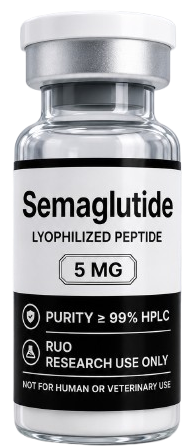
Semaglutide – synthetic GLP-1 analogue which is under investigation in the incretin peptides research.
This combination is of scientific interest as researchers are trying to find out how different peptide signalling systems interact with each other in laboratory conditions.
Cagrilintide Research Background
Cagrilintide is an artificial analogue of the naturally produced peptide hormone amylin.
Amylin is a part of some biological signaling processes related to nutrient communications and metabolism.
Scientists study Cagrilintide in order to find out more about:
- Amylin receptors interaction
- Peptide signaling process
- Hormone communication
- Molecular response in experiments
Semaglutide Research Background
Semaglutide is a synthetic peptide analogue which is connected to glucagon-like peptide-1 (GLP-1) receptors research.
GLP-1 related peptide signaling is important for the endocrine and metabolic biology.
Some research directions are as follows:
- Peptide-receptors interaction
- Incretin signaling pathways
- Cellular communication
- Molecular biology
Combination Research Approach
Scientists have a framework from CagriSema in which they can study the interaction of two different peptide pathways.
Areas of study in scientific research can include:
- Interaction of receptors
- Interactions between peptides in experiment models
- Molecular signaling pathways
- Interactions of biological pathways
Research into CagriSema is intended to enhance knowledge of peptide biology and signaling in science.
CagriSema offered by research peptide vendors is considered to be Research Use Only (RUO) reagent and has no approval for therapeutic or human use in Australia.
Molecular Properties of CagriSema
CagriSema is one of the peptide research combinations belonging to synthetic peptide research combinations.
The compound consists of two different peptide analogs whose molecular properties are studied separately and together.
Why Researchers Study CagriSema
The scientific rationale behind CagriSema is based on the chance to study interactions between different peptide signaling systems.
Scientists study the drug to gain knowledge about molecular mechanisms that are connected to:
- Peptide receptor function
- Endocrine signaling
- Molecular signaling pathways
- Cellular reactions
Amylin Pathway Studies
Amylin is a natural occurring peptide involved in biological signaling processes.
Amylin-related peptide compounds are studied to analyze:
- Receptor interactions
- Pathways of peptide signaling
- Molecular signaling
Cagrilintide can serve as an experimental tool in studying the amylin pathway.
GLP-1 Receptor Research
GLP-1 peptides are an important subject of endocrine biology studies.
Scientists conduct laboratory studies of:
- Peptide-receptor interaction
- Signal transmission pathways
- Cellular signaling pathways
Studies of Semaglutide contribute to gaining knowledge about artificial peptide signaling systems.
Metabolic Signaling Research
The scientific rationale behind studies of metabolic signaling pathways is to understand complex signaling between hormones, receptors, and cells.
Studies of CagriSema may include:
- Studies of molecular pathways
- Peptide interactions
- Experimental biological models
- Analytical studies
This kind of research aims to increase scientific knowledge about peptides biology.
Peptide Combination Studies
Combination peptides enable scientists to study how different signaling pathways can work together.
These can be explored:
- Structure compatibility
- Behavior of molecules
- Signaling relationship
- Responses to experiment
Such studies help in increasing scientific knowledge on various biological systems.
Production and Quality Assurance
High-quality peptides used in research require controlled production process, analytical characterization, and thorough documentation.
CagriSema 5mg + 5mg is produced as a research-grade synthetic peptide using known methods of producing peptides that are aimed to assure consistency, traceability, and analyzability of the peptides.
As CagriSema includes two peptides, the process of quality control involves thorough characterization of both components to assure their identity and properties.
Solid Phase Peptide Synthesis (SPPS)
Synthetic peptides are usually obtained via Solid Phase Peptide Synthesis (SPPS).
SPPS is a known technique of peptide chemistry that allows controlling the process of synthesis of amino acids to create a desired peptide.
The general production process includes the following steps:
- Preparation of peptide sequence
- Assembly of amino acids
- Chemical treatment and cleavage
- Purification
- Analysis
- Lyophilization
- Batch documentation
Such an approach allows scientists to obtain consistent peptides for further experiments in laboratories.
Purification Process
After synthesis, there is purification of the peptides in order to separate the desired compounds from any undesired substances.
Purification ensures removal of:
- Undesired fragments of peptides
- Impurities due to manufacturing process
- Remaining chemical ingredients
- Byproducts of molecules
With combination research peptides like CagriSema, quality assessment becomes critical to establish the properties of each molecule.
Quality Control Procedures
Quality control procedures ensure that research peptides conform to specifications as per documented evidence.
The process of quality evaluation may involve:
- Establishing identity
- Analysis of purity
- Characterization of molecules
- Evaluation of batches
- Verification of documentation
These ensure transparency for researchers while evaluating laboratory materials.
Research Use Only (RUO)
CagriSema 5mg + 5mg from Peptides Australia is available as Research Use Only (RUO) laboratory reagent.
RUO designation implies that the product is intended to be used for:
- Scientific research
- Laboratory analysis
- Educational studies
- Experimental studies
CagriSema is not licensed in Australia for therapeutic, diagnostic, veterinary or human use.
Research Materials vs Medicines
The main difference between research peptides and medicinal products is their purpose of use.
Medicines have undergone comprehensive evaluation for the following aspects:
- Safety data
- Manufacture quality
- Clinical data
- Licensed uses
Research peptides are supplied as laboratory reagents intended for scientific research.
Responsible Laboratory Use
Scientists and organisations working with RUO materials are obliged to meet:
- Requirements of the organisation
- Laboratory safety rules
- Requirements for research
- All relevant Australian legislation
CagriSema can be used in a laboratory setting under the supervision of experienced personnel.
Why choose Peptides Australia?
Good research requires access to properly characterised laboratory reagents and supporting documentation. Peptides Australia specializes in supplying research peptides with detailed information for:
- Laboratories
- Universities
- Biotech companies
- Scientific organizations
Batch-Specific Certificate of Analysis
Batch specific COAs provide researchers with product specific analytical information.
This includes:
- Research documentation
- Product authentication
- Laboratory traceability
Independent Laboratory Testing
Analytical testing enables researchers to determine:
- Peptide identification
- Purity profile
- Batch uniformity
HPLC Tested Peptides
HPLC testing is useful in providing analytical data about the makeup of the peptides.
Researchers can take advantage of the data when checking laboratory supplies.
Packaging that is appropriate ensures the safe transportation and storage of lyophilised peptide supplies.
Australia Wide Delivery
Delivery ensures access to:
- Research laboratories
- Universities
- Biotechnology organizations
- Scientific researchers
Researchers who intend to purchase CagriSema in Australia should check Certificate of Analysis documentation and analytical testing data before choosing lab peptides.
Research Use Only
This product is intended solely for laboratory research purposes. Not for human consumption.
Storage & Handling
Storage & Laboratory Handling Guidelines
Storage and handling requirements should be taken into account when storing peptides.
CagriSema is supplied in the form of lyophilized powder and should be handled in accordance with lab guidelines.
Temperature Management
Researchers need to take into consideration the conditions of storage that would limit any environmental changes.
The following points should be taken into consideration:
- Maintain proper storage conditions
- Prevent frequent changes in temperatures
- Protect materials during transportation
Moisture Control
Lyophilized peptides need to be protected from excessive moisture.
Lab good practices can involve:
- Keeping package closed
- Preventing exposure to humid conditions
- Following manufacturer’s storage recommendations
- Light Control
Researchers need to take into consideration the protection of peptide materials from excessive exposure to light.
Proper storage environment contributes to preserving analytical properties.
Lab Documentation
Proper research environments usually keep records concerning:
- Product batch
- Storage conditions
- Quality documentation
- Research procedures
Researchers can also refer to Peptide Storage Guidelines for more educational material concerning peptide stability.
Full Technical Specifications
Every batch of CagriSema is independently analysed before dispatch. The values below describe the current research batch.
| Product Name | CagriSema |
|---|---|
| CAS Number | 1415456-99-3 (Cagrilintide) | 910463-68-2 (Semaglutide) |
| Molecular Formula | C₂₃₁H₃₄₆N₆₀O₆₆S | C₁₈₇H₂₉₁N₄₅O₅₉ |
| Molecular Weight | 4571.3 g/mol | 4113.58 g/mol |
| Quantity / Strength | Cagrilintide 5mg + Semaglutide 5mg (10mg total) |
| Purity | ≥ 99% (HPLC) |
| Form | Lyophilised Powder |
| Appearance | White Lyophilised Powder |
| Batch Number | PA-0021 |
| Storage Conditions | 2°C-8°C (Refrigerated) |
| Category | Weight Loss |
| Intended Use | Research Use Only — not for human consumption |
Certificate of Analysis
Every batch of CagriSema is independently tested before dispatch. View the full COA for the current batch below.
Certificate of Analysis (COA)
Batch Number PA-0021
≥ 99%
Purity
HPLC
Confirmed
Identity
Mass Spec
Pass
Heavy Metals
ICP-MS
| COA Information | Purpose |
|---|---|
| Product Name | Confirms material identification |
| Batch Number | Supports product traceability |
| Purity Results | Provides analytical purity information |
| Testing Methods | Identifies laboratory techniques used |
| Identity Confirmation | Supports compound verification |
| Quality Review | Documents assessment process |
Batch Traceability
Traceability is a key feature of a responsible peptide supply process.
Every batch needs to be provided with clear documentation in order to enable researchers to analyze the following:
- Product data
- Batch identification
- Test results
- Quality documentation
- Storage information
Traceability ensures laboratory record keeping and research documentation.
Purity Test & Certificate of Analysis (COA)
Analytical tests provide critical data related to the quality parameters of research peptides.
Analytical documentation like purity data and identity determination are always examined before purchasing laboratory materials.
High-Performance Liquid Chromatography (HPLC)
One of the most frequently utilized methods for assessing the purity of peptides is High-Performance Liquid Chromatography (HPLC).
The method of high-performance liquid chromatography separates various components of a solution according to their chemical properties. Scientists may then analyze the obtained chromatogram and determine the amount of the desired peptide compounds present in the sample.
High-Performance Liquid Chromatography analysis may reveal:
- Percentage of purity
- Main peaks of the compounds
- Related substances
- Impurity profiling
- Consistency in batches
In peptide research laboratories, HPLC analysis offers valuable insights into the composition of samples.
Identity Testing Using LC-MS
Scientists often use Liquid Chromatography–Mass Spectrometry (LC-MS) along with HPLC analysis to verify the identity of peptides.
The LC-MS analysis helps scientists assess:
- Molecular weight
- Identity of the compounds
- Structure
Combining several methods for analyzing samples leads to obtaining a better understanding of peptide material.
Scientists who wish to learn more about laboratory tests may consider:
- Peptide Purity
- HPLC vs LC-MS Testing
- Third-Party Laboratory Testing
Certificate of Analysis Explaine
A Certificate of Analysis (COA) is a batch-specific quality document containing analytical information about a research peptide product.
A typical COA may include:
Reviewing a Certificate of Analysis allows researchers to better understand the specifications of laboratory materials before beginning investigations.
For universities, biotechnology companies, and scientific organisations, accurate documentation supports responsible research practices.
Research Disclaimer
For Research Use Only — Not for Human Consumption
This content is provided for educational, scientific and research-information purposes only. It does not provide medical advice, treatment recommendations or personal dosage instructions. Available evidence concerning CagriSema includes preclinical research and ongoing or completed clinical investigations, and further research is needed to establish its safety and efficacy for specific uses.
- Not for human or veterinary use
- No claims are made regarding safety or efficacy in humans
- Must be handled with appropriate laboratory safety equipment
- Purchaser assumes all responsibility for legal, compliant use
References
5 sources- 1Garvey WT, Blüher M, Osorto Contreras CK, et al. Coadministered Cagrilintide and Semaglutide in Adults with Overweight or Obesity. New England Journal of Medicine. 2025.PubMed: https://pubmed.ncbi.nlm.nih.gov/40544433/
- 2Davies MJ, et al. Cagrilintide-Semaglutide in Adults with Overweight or Obesity and Type 2 Diabetes. New England Journal of Medicine. 2025.PubMed: https://pubmed.ncbi.nlm.nih.gov/40544432/
- 3Enebo LB, Berthelsen KK, Kankam M, et al. Safety, Tolerability, Pharmacokinetics, and Pharmacodynamics of Concomitant Administration of Multiple Doses of Cagrilintide with Semaglutide 2.4 mg for Weight Management: A Randomised, Controlled, Phase 1b Trial. The Lancet. 2021;397(10286):1736-1748.PubMed: https://pubmed.ncbi.nlm.nih.gov/33894838/
- 4Garvey WT, et al. A Research Study to See How Well CagriSema Helps People with Excess Body Weight Lose Weight (REDEFINE 1). ClinicalTrials.gov. Study Identifier: NCT05567796. Clinical Trial:ClinicalTrials.gov: https://clinicaltrials.gov/study/NCT05567796
- 5Australian Government, Therapeutic Goods Administration (TGA). Concerns Regarding the Public Health Risks Associated with Unapproved Peptide Products. Therapeutic Goods Administration. 19 June 2026.TGA: https://www.tga.gov.au/news/media-releases/concerns-regarding-public-health-risks-associated-unapproved-peptide-products
Citations are provided for research reference and open in a new tab. Listing a study does not imply it evaluated this specific product.
Frequently Asked Questions
Researchers Also Purchase
Why Researchers Choose Us
Research-Grade Quality. Trusted by Researchers Across Australia.
Learn About Our QualityDiscreet Packaging
Fast Australia-Wide Delivery
Expert Support
30-Day Money Back