
Healing & Recovery
The healing and recovery category groups peptides that Australian laboratories use to study tissue repair mechanisms, connective tissue biology, gastrointestinal integrity and cutaneous wound healing.


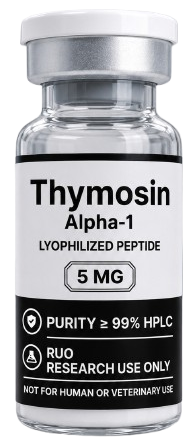


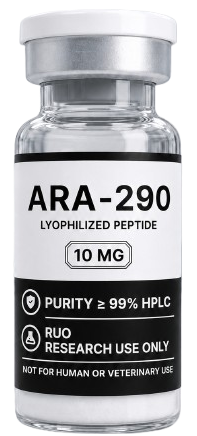
Tissue Repair and Recovery Research Peptides
The healing and recovery category groups peptides that Australian laboratories use to study tissue repair mechanisms, connective tissue biology, gastrointestinal integrity and cutaneous wound healing. Products in this category include BPC-157, TB-500, GHK-Cu, KPV and premium research blends such as GLOW and KLOW. Each is supplied as a research reference material, not as a therapy.
BPC-157 is a fifteen amino acid sequence derived from a protein found in gastric juice. It has been studied for its interaction with vascular and connective tissue models. TB-500 is a synthetic analogue of a region of thymosin beta-4, and it is used in cellular research on actin binding and cellular migration. GHK-Cu is a copper-binding tripeptide widely referenced in dermatology and cell culture research for its role in collagen and elastin studies. KPV is a short peptide fragment of alpha melanocyte stimulating hormone that appears in immune and gastrointestinal research literature.
Research areas served by this category
Australian research groups use these peptides in a range of preclinical and analytical studies. Connective tissue biologists use BPC-157 in tendon and ligament repair models. Vascular researchers study angiogenesis pathways in cell culture and rodent models. Gastroenterology groups examine mucosal integrity after chemical injury. Dermatology laboratories use GHK-Cu to study fibroblast activity, collagen expression and wound closure in scratch assays. KPV is often part of immunology research on inflammatory bowel disease models. The blends are used when a study protocol calls for combined actions in a single preparation.
Since tissue repair research often runs over several weeks, researchers usually order sufficient quantity at the start of a project to reduce the risk of batch variability across data points. Our team can help estimate how much peptide a study will need based on the planned assay design.
How we manufacture and test
Every peptide in this category is synthesised by solid-phase peptide synthesis, purified by reverse-phase HPLC and released only after independent purity and identity testing. Our specification for the category is a minimum of ninety-nine percent HPLC purity. Identity is confirmed by liquid chromatography mass spectrometry against the theoretical molecular weight of the sequence. Every vial carries a batch number that ties directly to the certificate of analysis.
Products are supplied lyophilised in sealed glass vials and shipped from Australia in insulated packaging. Storage after receipt is straightforward. Refrigerate at two to eight degrees Celsius for short-term use, or freeze at minus twenty degrees Celsius for longer storage. Any reconstituted solution should be prepared in the solvent and concentration stated on the batch certificate.
Choosing the right product
Selection depends on the biological question being investigated. Studies on connective tissue mechanics usually start with BPC-157 or TB-500. Skin and dermal signalling research typically calls for GHK-Cu. Studies on the gut immune interface often use KPV. When a protocol requires the combined actions of two or more sequences, the GLOW or KLOW blends can save reconstitution time and reduce variability.
If the peptide you need is not currently in stock, or you need a bulk order, please contact the research team. We can quote and dispatch specific research compounds on request for qualified Australian laboratories.
Documentation and compliance
Every batch is released with a certificate of analysis that lists the peptide name, sequence, batch number, HPLC purity percentage, LC-MS identity confirmation, appearance, and recommended storage conditions. The certificate is designed to satisfy the record-keeping requirements of Australian universities, research institutes and contract analytical laboratories.
All products in the healing and recovery category are supplied strictly for laboratory research use only. They are not medicines, and they are not intended for human or veterinary administration. No therapeutic claims are made. Purchasers agree to handle the products responsibly, in accordance with their own institutional safety protocols and applicable Australian research regulations.
Common questions
How long can I store a reconstituted BPC-157 solution? When reconstituted with bacteriostatic water and refrigerated at 2 to 8 degrees Celsius, BPC-157 typically remains stable for around 30 days. Keep the vial upright and shielded from light. Freeze-thaw cycling accelerates degradation of the pentadecapeptide sequence and should be avoided.
What is the difference between GLOW and KLOW blends? Both blends contain GHK-Cu and BPC-157 for connective tissue research. GLOW adds TB-500 as the fourth component, while KLOW adds KPV. KPV is an alpha-MSH fragment often studied for its anti-inflammatory activity, which shifts KLOW toward inflammatory-model work.
Why is GHK-Cu supplied as a copper complex? The tripeptide GHK naturally chelates copper ions in vivo, and the Cu(II) complex is the biologically active form used across the dermal and wound-repair literature. Supplying it pre-complexed removes a preparation step and gives consistent stoichiometry between batches.
Can BPC-157 and TB-500 be reconstituted in the same vial? Some researchers premix them for convenience, but for cleaner stability data we recommend reconstituting each peptide separately and drawing from individual vials. This lets you attribute any observed effect to a defined concentration of each compound rather than a combined stock.
References
1 source- 1PubMed — research literature for this areaPubMed: https://pubmed.ncbi.nlm.nih.gov/?term=peptide%20tissue%20repair%20wound%20healing
Citations are provided for research reference and open in a new tab. Listing a study does not imply it evaluated this specific product.