
Thymosin Alpha-1 is an experimental peptide used in the study of molecular biology, immunology, and cellular signaling processes. The Thymosin Alpha-1 is studied as a research peptide to learn more about the peptide structure, the ways cells communicate with each other, and molecular interactions in biological research systems.
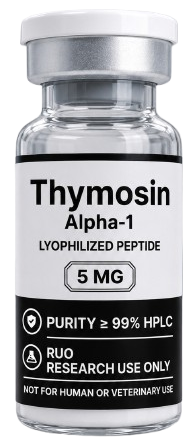
Certificate of Analysis
Batch PA-0106 — 5mg
View COA
Research Grade Quality
Independently Tested
Thymosin Alpha-1
$89.99
Size / Strength
HPLC Verified
COA Included
Fast Dispatch
Discreet Shipping
100% Quality Guarantee
Every batch of Thymosin Alpha-1 is independently third-party tested. 30-day money-back guarantee — no questions asked.
Thymosin Alpha-1 – Research Overview
Studies related to Thymosin Alpha-1 concentrate on laboratory research of peptides and biological pathways rather than any medical application.
Peptide research still continues to be valuable for science, as it helps scientists to get tools to investigate complex cellular processes.
At Peptides Australia, Thymosin Alpha-1 5mg/10mg is available only as a Research Use Only (RUO) laboratory product designed for research purposes. Each batch is accompanied with quality documentation, such as analysis data and specific Certificates of Analysis (COA).
Research Highlights
- Independent Laboratory Tested
- Batch-Specific Certificate of Analysis
- Australia-Wide Dispatch
- Research Use Only
- HPLC Tested Peptide Material
What is Thymosin Alpha-1?
Thymosin Alpha-1 is a synthetic peptide research compound researched within the areas of peptide chemistry, molecular biology, and immunology research.
It is a natural peptide derivative first identified as belonging to the thymosin family of peptides. The Thymosin Alpha-1 is researched by scientists to learn about its molecular properties and interactions in laboratory models.
Scientists conduct Thymosin Alpha-1 research as peptides may serve as useful molecular probes for researching:
- Cellular signaling
- Peptide-receptor interactions
- Signaling pathways
- Regulation mechanisms of biological processes
Similar to other research peptides, Thymosin Alpha-1 is investigated in laboratory conditions and is not available as an approved drug or consumer product.
Scientific Background of Thymosin Research
The thymosin group stands for a family of peptides investigated within the areas of molecular biology and cell research. The thymosin-related peptides are researched by scientists to learn about:
- Peptide structure
- Molecular signaling
- Cellular signaling
- Interactions of biological pathways
Thymosin Alpha-1 is extensively investigated in scientific literature as a peptide model for researching molecular mechanisms of cellular signaling. Thymosin peptide research contributes to the overall scientific knowledge about interactions of molecular structures in biological systems.
Peptide Classification
Thymosin Alpha-1 is considered a synthetic peptide. Peptides consist of short chains of amino acids linked by peptide bonds. The properties of individual peptides may be determined by:
- Sequence of amino acids
- Molecular structure
- Chemical properties
- Environment
The analysis of the properties of peptides is carried out with the help of laboratory methods such as:
- High-Performance Liquid Chromatography (HPLC)
- Liquid Chromatography–Mass Spectrometry (LC-MS)
Thymosin Family Research Overview
The thymosin family peptides are researched in several fields of molecular and cellular biology. The peptides are studied by scientists in order to determine:
- Protein interaction
- Cell signaling networks
- Molecular communication
- Regulation
Thymosin Alpha-1 is a peptide research tool allowing researchers to study specific molecular properties. Scientific studies on the thymosin family peptides do not constitute medical application.
Molecular Properties of Thymosin Alpha-1
It is very important to know the structure of the peptide in laboratory studies. Evaluation of the Thymosin Alpha-1 is conducted using analytical methods for determination of molecular properties.
Molecular Structure and Peptide Composition
Thymosin Alpha-1 is made up of a distinct amino acid sequence, which is used by scientists to learn more about peptide structures and molecular behavior. Testing carried out in the laboratory can involve:
- Identification of the peptide
- Properties of the sequence
- Molecular weight
- Profile of purity
Knowing the composition of peptides enables scientists to compare molecular structures and study their biological activity.
Lyophilized Peptide Powder
Thymosin Alpha-1 is provided as lyophilized powder designed for use in the laboratory. Lyophilization is a freeze drying procedure typically used in making peptides. It reduces moisture while ensuring consistency during storage and transportation. Advantages of lyophilized research peptides are:
- Less moisture contact
- Storage consistency
- Laboratory record keeping
- Consistent material handling
Scientists need to handle lyophilized peptides according to proper laboratory procedures.
Stability Considerations
Stability of peptides may also be affected by the environment. Scientists usually take into account:
- Temperature
- Humidity
- Light exposure
- Packaging
- Duration of storage
Proper maintenance of the storage environment facilitates the preservation of research material characteristics.
Scientists may consult the following resources related to their topic:
- Understanding Peptide Purity
- Peptide Storage Information
- How to Interpret a Certificate of Analysis
Why Researchers Study Thymosin Alpha-1
Thymosin Alpha-1 becomes scientifically interesting due to research of peptide structure and molecular interaction in research models of cells. Research in laboratory may include:
- Peptide signaling
- Cellular communication
- Molecular interactions
- Biological research models
The aim of such research is to enhance scientists' knowledge about peptides.
Immune Biology Research Context
The biology of immunity is a sophisticated area of science with interaction among cells, proteins, and signaling molecules.
The study of immune biology is conducted for the sake of:
- Cellular communication
- Signaling molecules
- Protein interactions
- Biological regulation
Thymosin Alpha-1 is studied as a peptide research model in the wider sphere of scientific inquiry.
These studies concern themselves with molecular mechanisms, and not medical outcomes.
Cellular Signalling Studies
Cellular signalling studies the process of molecular communication in biological systems. This involves the study of:
- Signalling pathways
- Interactions among molecules
- Cellular response
- Mechanisms of regulation
Peptides like Thymosin Alpha-1 provide specific molecular structures for evaluation by researchers in laboratory conditions.
T-Cell and Cytokine Research Models
The study of T-cells and cytokine biology is an important part of immunology.
Scientists study:
- Cellular communication
- Cytokine interactions
- Signalling pathways
- Biological mechanisms
Studying Thymosin Alpha-1 provides knowledge of peptide interactions in these research models.
Innate and Adaptive Immune Research
The innate and adaptive immune systems are biologically complex networked systems that are studied through the field of immunology.
Studies include:
- Cell communication
- Signalling
- Biological pathways control
Research into Thymosin Alpha-1 involves the study of peptide related mechanisms in laboratory experiments.
Experimental Laboratory Applications
Thymosin Alpha-1 could be investigated through means such as:
- Molecular identification
- Chemistry analysis
- Cellular investigation
- Peptide interactions
This study will help in increasing the scientific understanding of peptide structure and biological signalling systems.
Production and Quality Standards
Reliable research peptides need well controlled manufacturing processes, analytical verification, and comprehensive documentation. Thymosin Alpha-1 5mg/10mg is manufactured as a research peptide using standard peptide chemistry techniques for laboratory assessment. Peptide manufacturing process that focuses on quality usually involves:
- Peptide sequence design
- Synthesis
- Purification
- Analysis
- Lyophilization
- Documentation
Through this process, the researcher can assess laboratory peptides based on their quality information.
Solid Phase Peptide Synthesis (SPPS)
Solid phase peptide synthesis (SPPS) is among the most widely used methods for manufacturing synthetic peptides for research purposes. SPPS enables the assembly of amino acids to form a definite peptide structure. The usual steps involved are:
- Selection of peptide sequence
- Coupling of amino acids
- Cleanup of synthesis products
- Purification of the peptide
- Testing of the peptide
- Lyophilization
- Batch evaluation
Such a process facilitates the manufacture of peptides that have specific molecular properties.
Purification Process
Once synthesized, the purification process takes place to remove the target peptide from other impurities. The purification process aids in removing:
- Incomplete peptide sequence
- Synthesis chemicals
- Associated peptides
- Impurities generated through the process
An effective purification process is essential for analytical consistency and documentation by researchers.
Lyophilization Process
Once purified and analyzed, the Thymosin Alpha-1 peptide is processed into lyophilized form. This is a controlled freeze drying process, and it is a common technique for research peptides. It ensures dehydration while maintaining consistency during storage and transportation.
Advantages of lyophilized research peptides include:
- Less moisture
- Better storage consistency
- Ease of documentation in laboratories
- Controlled handling of materials
Suitable laboratory procedures should be used for lyophilized peptides.
Research Use Only (RUO)
Thymosin Alpha-1 5mg/10mg from Peptides Australia is solely supplied as a Research Use Only (RUO) laboratory reagent.
This material is strictly meant for:
- Scientific research
- Laboratory testing
- Education and research
- Experimental study
Thymosin Alpha-1 has not been approved in Australia for therapeutic, diagnostic, veterinary, cosmetic, and human application.
Research Materials vs Approved Products
There is a distinction between research peptides and approved drugs. Regulatory assessment includes:
- Evaluation of safety
- Clinical trial
- Manufacturing evaluation
- Applying for approval
Research peptides are for scientific study and are not the same as approved drugs.
Responsible Laboratory Research
The individuals and organizations involved in using RUO products must ensure that their use is in accordance with:
- Institutional guidelines
- Laboratory safety procedures
- Research governance guidelines
- Relevant Australian regulations
Thymosin Alpha-1 must be used exclusively in proper laboratory conditions by professionals only.
Reasons to Select Peptides Australia
Accurate peptide research is made possible with the aid of relevant documentation, quality information, and proper laboratory material. Peptides Australia provides information that is useful for:
- Universities
- Biotechnology companies
- Research laboratories
- Science institutions
Batch Specific COA
Batch specific COAs provide product-specific analysis. This allows for:
- Laboratory documentation
- Verification of materials
- Research accountability
Independent Laboratory Testing
Analytical testing gives scientists information about:
- Peptide identification
- Purity properties
- Batch uniformity
HPLC Tested Peptides
HPLC testing gives analytical data on purity and composition of peptides. Scientists can review testing certificates while analyzing peptide laboratory materials.
Safe Packaging
Proper packaging helps preserve lyophilized research materials during shipping and storage.
Nationwide Delivery
Reliable delivery helps access the material for:
- Research organizations
- Universities
- Biotechnology companies
- Science laboratories
Potential purchasers of Thymosin Alpha-1 in Australia should consider the following factors when choosing laboratory peptides.
Research Use Only
This product is intended solely for laboratory research purposes. Not for human consumption.
Thymosin Alpha-1 – Storage & Handling
Storage & Laboratory Handling Information
Proper storage and handling techniques are crucial for ensuring that research peptides are of high quality. Thymosin Alpha-1 comes in the form of lyophilized powder.
Temperature Considerations
Researchers should think about storing their peptide in environments where the temperature does not fluctuate unnecessarily. Such factors as:
- Storage under proper conditions
- Temperature fluctuations prevention
- Materials protection during shipping
Moisture Protection
Lyophilized peptide materials should be protected against excess moisture. Some good laboratory practices may involve:
- Properly sealed containers
- Limited humidity exposure
- Following supplier storage suggestions
Light Protection
Researchers should consider protecting peptide materials against excess direct light exposure. Controlled storage conditions ensure the preservation of research material properties.
Laboratory Documentation
It is common practice for scientific facilities to have records on:
- Batch data
- Storage conditions
- Product specifications
- Research processes
Good laboratory documentation ensures responsible laboratory quality systems. Researchers can learn more about:
- Peptide Storage Recommendations
- Certificate of Analysis Reading
- Laboratory Quality Control
Thymosin Alpha-1 – Technical Specifications
Every batch of Thymosin Alpha-1 is independently analysed before dispatch. The values below describe the current research batch.
| Product Name | Thymosin Alpha-1 |
|---|---|
| CAS Number | 62304-98-7 |
| Molecular Formula | C₁₂₉H₂₁₅N₃₃O₅₅ |
| Molecular Weight | 3108.3 g/mol |
| Quantity / Strength | 5mg | 10mg |
| Purity | ≥ 99% (HPLC) |
| Form | Lyophilised Powder |
| Appearance | White Lyophilised Powder |
| Sequence | Ac-Ser-Asp-Ala-Ala-Val-Asp-Thr-Ser-Ser-Glu-Ile-Thr-Thr-Lys-Asp-Leu-Lys-Glu-Lys-Lys-Glu-Val-Val-Glu-Glu-Ala-Glu-Asn |
| Batch Number | PA-0106 |
| Storage Conditions | 2°C-8°C (Refrigerated) |
| Category | Healing & Recovery |
| Intended Use | Research Use Only — not for human consumption |
Thymosin Alpha-1 – Certificate of Analysis
Every batch of Thymosin Alpha-1 is independently tested before dispatch. View the full COA for the current batch below.
Certificate of Analysis (COA)
Batch Number PA-0106
≥ 99%
Purity
HPLC
Confirmed
Identity
Mass Spec
Pass
Heavy Metals
ICP-MS
| COA Information | Purpose |
|---|---|
| Product Name | Confirms peptide identification |
| Batch Number | Supports traceability |
| Purity Results | Provides analytical evaluation |
| Testing Method | Identifies laboratory techniques |
| Identity Testing | Supports molecular confirmation |
| Quality Review | Documents assessment |
Batch Traceability and Quality Documentation
Batch traceability plays a crucial role in responsible research peptide supply. Documentation associated with the Thymosin Alpha-1 includes:
- Product identification
- Batch number
- Analytical data
- Specifications of quality
- Storage conditions
It is important for maintaining proper records of laboratory materials for universities, biotechnology firms, and research organizations.
Purity Testing & Certificate of Analysis (COA)
Analytical testing gives researchers information concerning peptide identity, purity features, and quality specifications. Prior to choosing laboratory peptides, researchers usually consider the following:
- Information concerning purity
- Results of analytical testing
- Information concerning identity
- Batch documentation
High-Performance Liquid Chromatography (HPLC)
High-Performance Liquid Chromatography (HPLC) is one of the most common analytical methods to test peptide purity. HPLC method involves separation of substances within a sample and creation of a chromatogram to assess analytically.
For Thymosin Alpha-1 research products, HPLC testing can give the information concerning:
- Percentage of purity
- Composition of the sample
- Other peptide compounds
- Consistency of batches
HPLC testing is extensively used in peptide chemistry, biotechnology, and research laboratories. Researchers interested in analytical methods could consider:
- Understanding Peptide Purity
- HPLC versus LC-MS Testing
- Third Party Laboratory Testing
LC-MS Identity Testing
Liquid Chromatography-Mass Spectrometry (LC-MS) is commonly used for peptide identity testing. Using LC-MS testing researchers could assess the following:
- Molecular mass
- Peptide identity expected
- Structure characteristics
Using complementary analytical testing provides more information concerning research peptides.
Certificate of Analysis Explained
A Certificate of Analysis (COA) is a batch-specific quality document containing analytical information about a research peptide.
A typical COA may include:
COA allows scientists to examine specifications for lab material prior to undertaking scientific experiments.
Individuals interested in buying Thymosin Alpha-1 in Australia must look at the Certificate of Analysis documents, analytical testing details, and Research Use Only designation before choosing lab peptides.
Research Disclaimer
For Research Use Only — Not for Human Consumption
This content is provided for educational, scientific and research-information purposes only. It does not provide medical advice, treatment recommendations or personal dosage instructions. Available evidence concerning Thymosin Alpha-1 includes preclinical research and clinical investigations across a range of research areas. Further research is required to establish its safety and efficacy for specific uses, and findings relating to authorised products or uses in other jurisdictions should not be attributed to unregistered or research-grade products.
- Not for human or veterinary use
- No claims are made regarding safety or efficacy in humans
- Must be handled with appropriate laboratory safety equipment
- Purchaser assumes all responsibility for legal, compliant use
References
5 sources- 1Dominari A, Hathaway D III, Pandav K, et al. Thymosin Alpha 1: A Comprehensive Review of the Literature. World Journal of Virology. 2020;9(5):67-78.PubMed Central: https://pmc.ncbi.nlm.nih.gov/articles/PMC7747025/
- 2Romani L, Bistoni F, Gaziano R, et al. Thymosin Alpha 1 Activates Dendritic Cells for Antifungal Th1 Resistance through Toll-Like Receptor Signaling. Blood. 2004;103(11):4232-4239.PubMed: https://pubmed.ncbi.nlm.nih.gov/14976042/
- 3Wu J, Zhou L, Liu J, et al. The Efficacy of Thymosin Alpha 1 for Severe Sepsis (ETASS): A Multicenter, Single-Blind, Randomized and Controlled Trial. Critical Care. 2013;17(1):R8.PubMed Central: https://pmc.ncbi.nlm.nih.gov/articles/PMC4056079/
- 4Matteucci C, Minutolo A, Sinibaldi-Vallebona P, et al. Transcription Profile of Human Lymphocytes following in Vitro Treatment with Thymosin Alpha-1. Annals of the New York Academy of Sciences. 2010;1194:6-19.PubMed: https://pubmed.ncbi.nlm.nih.gov/20536444/
- 5Australian Government, Therapeutic Goods Administration (TGA). Concerns Regarding the Public Health Risks Associated with Unapproved Peptide Products. Therapeutic Goods Administration. 19 June 2026.TGA: https://www.tga.gov.au/news/media-releases/concerns-regarding-public-health-risks-associated-unapproved-peptide-products
Citations are provided for research reference and open in a new tab. Listing a study does not imply it evaluated this specific product.
Thymosin Alpha-1 – Frequently Asked Questions
Researchers Also Purchase


Why Researchers Choose Us
Research-Grade Quality. Trusted by Researchers Across Australia.
Learn About Our QualityDiscreet Packaging
Fast Australia-Wide Delivery
Expert Support
30-Day Money Back