
Delta Sleep-Inducing Peptide (DSIP) is a laboratory study of peptide compounds which is explored within the realm of neuroscience, peptide chemistry, and molecular biology studies. DSIP is being studied by scientists researching peptide signalling systems, neurobiology, and molecular signalling systems in a laboratory setting.
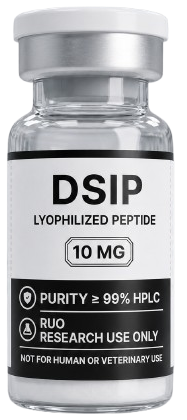
Certificate of Analysis
Batch PA-0132 — 10mg
View COA
Research Grade Quality
Independently Tested
DSIP
$75.99
Size / Strength
HPLC Verified
COA Included
Fast Dispatch
Discreet Shipping
100% Quality Guarantee
Every batch of DSIP is independently third-party tested. 30-day money-back guarantee — no questions asked.
Product Description
Despite the name of DSIP, it is not used as a sleep-inducing drug or a pharmaceutical product. The scientific studies using DSIP aim at studying the peptide structure and molecular mechanisms and signalling processes.
Scientific research peptides like DSIP allow scientists to study certain molecular processes in the lab.
DSIP 10mg at Peptides Australia is offered solely as a Research Use Only (RUO) laboratory product aimed at scientific studies.
Research Highlights
- Independent Laboratory Tested
- Batch-Specific Certificate of Analysis
- Australia-Wide Dispatch
- Research Use Only
- HPLC Tested Peptide Material
What is DSIP?
Delta Sleep-Inducing Peptide (DSIP) is an endogenous peptide, which was first discovered by scientists in the course of studies of neurochemical signaling systems. It is a peptide of nine amino acids and is used in scientific research in neuroscience and molecular biology.
DSIP is among research peptides, which are studied in order to reveal interactions between peptide molecules and biological systems.
Study of DSIP involves:
- Peptide composition
- Molecular signaling
- Neurobiology processes
- Cellular communication
Scientific study of DSIP deals with the discovery of molecular mechanisms and not with clinical application.
DSIP, like other research peptides, is intended for laboratory studies and does not have any approval in Australia for medical use.
Scientific Background of DSIP Research
DSIP was discovered in studies of peptide mechanisms involved in neurological signaling.
Scientists have studied DSIP as part of research on:
- Endogenous peptide compounds
- Systems of neural signaling
- Signaling pathways in biology
- Interactions at the molecular level
Peptide studies give important information about how small biological compounds communicate in complex systems.
Studies of DSIP have added to the general body of neuropeptide science by giving researchers an opportunity to investigate peptides and their possible molecular interactions.
Peptide Classification
DSIP is a synthetic peptide.
Peptides are short amino acid chain polymers joined by peptide bonds. The properties of peptides depend on:
- Amino acid sequence
- Structure
- Chemical properties
- Stability in the environment
DSIP is made up of nine amino acids:
Trp-Ala-Gly-Gly-Asp-Ala-Ser-Gly-Glu
Research peptides are analyzed in labs using highly sophisticated analytical techniques such as:
- High-Performance Liquid Chromatography (HPLC)
- Liquid Chromatography – Mass Spectrometry (LC-MS)
These techniques help confirm peptide identity and evaluate quality characteristics.
Delta Sleep-Inducing Peptide Research Overview
Studies of DSIP have always been concerned with the knowledge about peptide interaction in the field of neurobiology. The name of DSIP as "Delta Sleep-Inducing Peptide" is a result of initial scientific observations concerning biological models of sleep. Laboratory research of DSIP does not indicate that it is a sleep drug.
Scientists still research peptide signaling systems in order to learn more about:
- Molecular communication
- Neural systems
- Biological regulation
- Peptide-receptor interaction
Scientific research is always aimed at the molecular level.
Molecular Characteristics of DSIP
The study of peptide structure is an important component of laboratory work. Analysis of DSIP involves techniques to prove:
- Identity of the peptide
- Molecular structure
- Properties of purity
Stability Considerations
Environmental conditions could influence peptide stability. Some of the parameters considered by researchers include:
- Temperature
- Moisture
- Light exposure
- Packaging
- Storage time
Proper storage conditions help in preserving the research material attributes.
The following sources could provide some useful information on related issues:
- Peptide Purity
- Peptide Storage
- Reading Certificate of Analysis
Why Researchers Study DSIP
DSIP is of interest to scientists because of the study of peptide signaling and molecule communication. These laboratory studies could include the study of:
- Neuropeptide signaling
- Molecule interactions
- Cellular communication
- Signaling processes in biology
The study of DSIP leads to the understanding of interaction between peptide molecules within biological models.
Neurobiology Research Context
Neurobiological research focuses on communication networks that involve neurons, molecules, and signaling pathways. The research focuses on:
- Neuronal communication
- Peptide interaction
- Molecular pathways
- Cellular response
DSIP research falls under the category of experimental peptide models in this scientific study.
These studies are intended for gaining knowledge about molecular biology and not for any medical application.
Peptide Signalling Research
Signalling by peptides occurs through interaction of molecules and biological systems.
Peptide signalling is studied by scientists to gain insight into:
- Receptor binding
- Molecular interactions
- Signal transduction
- Biological control
The use of DSIP gives a well-defined peptide structure for experimentation.
Sleep-Wake Cycle Research Models
Research in sleep and circadian biology includes complicated processes at molecular, cellular, and neurologic levels. Scientists use animal models to investigate:
- Rhythms of life
- Communication between neurons
- Molecular signaling processes
The study of DSIP is an integral part of the scientific inquiry into neuropeptide mechanisms. These researches are not approved sleep-related applications.
Central Nervous System Research Context
CNS study involves the investigation of molecular signaling in neurological systems.
Studies include:
- Neurochemical signaling
- Peptide interaction
- Molecular signaling
- Cellular communication
DSIP aids scientific studies in the peptide-related signaling field in experimental conditions.
Experimental Laboratory Applications
DSIP can be investigated through techniques such as:
- Peptide characterization
- Molecular biology
- Cell signaling
- Analytical chemistry
The goal of all this research is to increase scientific knowledge regarding peptides and their molecular mechanisms.
Manufacturing & Quality Standards
For the manufacture of credible research peptides, there is the need for controlled synthesis, analysis, and documentation of the process.
DSIP 10mg is a manufactured research peptide that has been developed through the use of synthetic peptide chemistry methods.
This is a procedure in peptide manufacture that usually involves:
- Sequence preparation of the peptide
- Solid Phase Peptide Synthesis (SPPS)
- Purification
- Analytical testing
- Lyophilisation
- Batch documentation
Using such a quality oriented process enables one to evaluate peptides in the laboratory.
Solid Phase Peptide Synthesis (SPPS)
Another well-known technique that is often used for the production of research peptides is Solid Phase Peptide Synthesis (SPPS).
SPPS enables the controlled assembly of amino acids into a particular sequence of a peptide.
A typical production procedure involves the following steps:
- Peptide sequence selection
- Amino acid coupling
- Synthesis by-products removal
- Peptide cleaving from a solid substrate
- Purification of the resulting product
- Product analysis
- Lyophilisation and packing
This technique allows the production of peptides with stable properties.
Purification Process
Following synthesis, there is purification to isolate the desired peptide from undesired material. Purification assists in minimizing:
- Incomplete peptides
- Other peptides
- Synthesis by-products
- Other process contaminants
Controlled purification facilitates quality assurance and permits evaluation of analytical reports.
Lyophilisation Process
After purification and analysis, the DSIP becomes a lyophilized powder. Lyophilization refers to freeze drying, which is frequently used for research peptide substances. It ensures that the moisture content is minimized while also aiding in consistency.
The advantages of using lyophilized research peptides include:
- Less exposure to moisture
- Increased storage consistency
- Better laboratory record keeping
- Consistent handling processes
Scientists should adhere to proper laboratory procedures when handling lyophilized peptides.
Research Use Only (RUO)
DSIP 10mg from Peptides Australia is strictly provided for research purposes only.
The DSIP 10mg is only meant for the following uses:
- Scientific study
- Laboratory tests
- Research purposes
- Experimental studies
DSIP 10mg has no approved application for human or any other use in Australia.
Research Materials vs Approved Products
The study of peptides and pharmaceuticals have distinct objectives.
Approved pharmaceuticals involve an evaluation process including:
- Safety assessment
- Clinical trials
- Production evaluation
- Therapeutic uses approved by regulation
Research peptides are provided for research purposes and are not the same as approved pharmaceuticals, dietary supplements, and other consumer goods.
Responsible Laboratory Research
Responsibilities of the researchers and organizations dealing with RUO products include making sure that:
- Institutional policies are followed
- Laboratory practices are safe
- Research governance is observed
- Australian regulations are observed
DSIP must be dealt with in proper laboratory conditions.
Why Choose Peptides Australia?
Accurate peptide research depends on the availability of clear documentation, reliable information, and standardized laboratory reagents.
Peptides Australia helps scientists by offering information that is targeted at:
- Universities
- Biotech firms
- Research laboratories
- Scientific institutions
Batch-Specific Certificate of Analysis
Batch-specific COA gives analytical data linked to specific products.
This facilitates:
- Laboratory documentation
- Material verification
- Traceability of research
Independent Laboratory Testing
Analytical testing gives researchers information on:
- Peptide identification
- Purity features
- Consistency of batch
HPLC Tested Peptides
HPLC analysis delivers information on the purity and makeup of peptides. Peptide samples for laboratory use can be evaluated through the documentation of testing results.
Secure Packaging
Proper packaging assists in the protection of lyophilised materials.
Australia-Wide Dispatch
Reliable dispatch is necessary for:
- Research facilities
- Universities
- Biotechnology firms
- Scientific laboratories
Researchers interested in the procurement of DSIP from Australia need to consider the following:
- Product specification
- Availability of Certificate of Analysis
- Analytical data
- Classification as Research Use Only
Research Use Only
This product is intended solely for laboratory research purposes. Not for human consumption.
Storage & Handling
Storage & Laboratory Handling Guidelines
It is essential to adopt proper storage and handling techniques to maintain the quality of the research material of peptides.
DSIP comes as a lyophilized powder and needs to be handled in accordance with proper laboratory protocols.
Temperature Considerations
Scientists may have to ensure that they handle their material under controlled temperature conditions that minimize temperature variations.
Key factors are:
- Proper storage conditions
- Temperature variations
- Transportation of materials
Moisture Protection
Lyophilized peptide materials must be shielded from moisture.
Good laboratory practices can include:
- Maintaining proper seals on the containers
- Limiting humidity
- Following supplier storage recommendations
Light Protection
Scientists should take into consideration the protection of peptide materials from direct light exposure.
Controlled storage conditions ensure the preservation of properties of research materials.
Laboratory Documentation
Records that scientific institutions normally keep include:
- Batch Details
- Storage Conditions
- Product Specifications
- Research Procedures
Documentation plays an important role in ensuring lab quality systems.
One can investigate:
- Peptide Storage Recommendations
- Understanding a Certificate of Analysis
- Lab Quality Control
Full Technical Specifications
Every batch of DSIP is independently analysed before dispatch. The values below describe the current research batch.
| Product Name | DSIP |
|---|---|
| CAS Number | 62568-57-4 |
| Molecular Formula | C₃₅H₄₈N₁₀O₁₅ |
| Molecular Weight | 848.81 g/mol |
| Quantity / Strength | 10mg |
| Purity | ≥ 99% (HPLC) |
| Form | Lyophilised Powder |
| Appearance | White Lyophilised Powder |
| Sequence | Trp-Ala-Gly-Gly-Asp-Ala-Ser-Gly-Glu |
| Batch Number | PA-0132 |
| Storage Conditions | 2°C-8°C (Refrigerated) |
| Category | Cognitive Support |
| Intended Use | Research Use Only — not for human consumption |
Certificate of Analysis
Every batch of DSIP is independently tested before dispatch. View the full COA for the current batch below.
Certificate of Analysis (COA)
Batch Number PA-0132
≥ 99%
Purity
HPLC
Confirmed
Identity
Mass Spec
Pass
Heavy Metals
ICP-MS
| COA Information | Purpose |
|---|---|
| Product Name | Confirms peptide identification |
| Batch Number | Supports traceability |
| Purity Results | Provides analytical evaluation |
| Testing Method | Identifies laboratory techniques |
| Identity Testing | Supports molecular confirmation |
| Quality Review | Documents assessment |
Batch Traceability and Quality Documentation
Batch traceability is one aspect that is essential for responsible research peptide supply. The documentation relating to DSIP can include:
- Product identity
- Batch number
- Analytical testing data
- Purity information
- Storage recommendations
Keeping accurate records aids universities, biotechnology firms, and research organizations in identifying laboratory materials.
Purity Testing & Certificate of Analysis (COA)
The analytical test will give researchers information on the identity, purity, and specifications of the peptide.
Prior to choosing lab peptides, it is typical for researchers to consider:
- Purity results
- Identity
- Analysis methods
- Batch information
High-Performance Liquid Chromatography (HPLC)
High-Performance Liquid Chromatography (HPLC) is a highly popular method for assessing the purity of peptides. HPLC separates the elements in a sample and gives a chromatogram that is analyzed for this purpose. In the case of DSIP research products, HPLC analysis can give data on:
- Percentage purity
- Composition of the peptide
- Associated compounds
- Consistency of the batch
HPLC is frequently used in the field of peptide chemistry, biotechnology, pharmaceutical research, and academia. Analytical methods interested researchers could learn about include:
- Peptide Purity Analysis
- HPLC vs LC-MS Testing
- Laboratory Testing by a Third Party
LC-MS Identity Testing
Liquid Chromatography-Mass Spectrometry (LC-MS) is frequently employed in determining the identities of peptides. LC-MS analysis assists scientists in assessing:
- Molecular weight
- The expected identity of the peptide
- Structural features
Employing multiple analytical methods gives additional information on the research peptides.
Certificate of Analysis Explained
Certificate of Analysis (COA) is an individual quality documentation that contains analytical data concerning a research peptide.
A typical Certificate of Analysis usually includes:
The COA enables scientists to examine the specifications for laboratory materials prior to conducting any scientific study.
Scientists who are thinking of buying DSIP in Australia should analyze the COA, test data, and RUO status before selecting laboratory peptides.
Research Disclaimer
For Research Use Only — Not for Human Consumption
This content is provided for educational, scientific and research-information purposes only. It does not provide medical advice, treatment recommendations or personal dosage instructions. Available evidence concerning DSIP includes preclinical research and limited clinical investigations. Further research is required to better understand its safety, pharmacology and potential efficacy for specific research applications.
- Not for human or veterinary use
- No claims are made regarding safety or efficacy in humans
- Must be handled with appropriate laboratory safety equipment
- Purchaser assumes all responsibility for legal, compliant use
References
5 sources- 1Schneider-Helmert D, Schoenenberger GA. The Influence of Synthetic DSIP (Delta-Sleep-Inducing Peptide) on Human Sleep. Experientia. 1981.PubMed: https://pubmed.ncbi.nlm.nih.gov/7028502/
- 2Monti JM, et al. Study of Delta Sleep-Inducing Peptide Efficacy in Improving Sleep in Insomniac Patients. European Neurology. 1987.PubMed: https://pubmed.ncbi.nlm.nih.gov/3583493/
- 3Bes F, Hofman W, Schuur J, Van Boxtel C. Effects of Delta Sleep-Inducing Peptide on Sleep of Chronic Insomniac Patients: A Double-Blind Study. Neuropsychobiology. 1992;26(4):193-197.PubMed: https://pubmed.ncbi.nlm.nih.gov/1299794/
- 4Kovalzon VM, Strekalova TV. Delta Sleep-Inducing Peptide (DSIP): A Still Unresolved Riddle. Journal of Neurochemistry. 2006;97(2):303-309.PubMed: https://pubmed.ncbi.nlm.nih.gov/16539679/
- 5Australian Government, Therapeutic Goods Administration (TGA). Concerns Regarding the Public Health Risks Associated with Unapproved Peptide Products. Therapeutic Goods Administration. 19 June 2026.TGA: https://www.tga.gov.au/news/media-releases/concerns-regarding-public-health-risks-associated-unapproved-peptide-products
Citations are provided for research reference and open in a new tab. Listing a study does not imply it evaluated this specific product.
Frequently Asked Questions
Researchers Also Purchase

Why Researchers Choose Us
Research-Grade Quality. Trusted by Researchers Across Australia.
Learn About Our QualityDiscreet Packaging
Fast Australia-Wide Delivery
Expert Support
30-Day Money Back