
IGF-1 LR3 is a synthesized peptide research chemical studied in the disciplines of molecular biology, peptide chemistry, and cellular signalling. Research into IGF-1 LR3 peptide takes the form of peptide experimentation to understand molecular mechanisms, receptor activity, protein signaling pathways, and biological communication systems under controlled laboratory conditions.
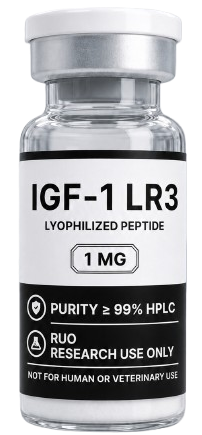
Certificate of Analysis
Batch PA-0141 — 1mg
View COA
Research Grade Quality
Independently Tested
IGF-1 LR3
$134.99
Size / Strength
HPLC Verified
COA Included
Fast Dispatch
Discreet Shipping
100% Quality Guarantee
Every batch of IGF-1 LR3 is independently third-party tested. 30-day money-back guarantee — no questions asked.
IGF-1 LR3 – Research Overview
Research using IGF-1 LR3 investigates peptide structure, biochemical reactions, and molecular pathways without consideration for therapeutic, performance, or human use.
Peptide research chemicals like IGF-1 LR3 allow researchers to conduct research on biological systems using well-defined molecular building blocks.
At Peptides Australia, IGF-1 LR3 1mg is supplied exclusively as a Research Use Only (RUO) laboratory research chemical for scientific, analytical, and educational research purposes only. All batches include documentation of quality, such as analysis data and batch-specific Certificates of Analysis (COA).
Research Highlights
- Independent Laboratory Tested
- Batch-Specific Certificate of Analysis
- Australia-Wide Dispatch
- Research Use Only
- HPLC Tested Peptide Material
What is IGF-1 LR3?
Insulin-like Growth Factor-1 Long R3 or IGF-1 LR3 is a research peptide used in studies related to molecular biology and cell signaling.
This particular peptide is a modified version of IGF-1 that acts as a research peptide for studies in relation to peptide-receptor interaction and signaling pathways.
Research involving IGF-1 LR3 is done to understand:
- Peptide-receptor interaction
- Cell communication mechanism
- Signaling pathways
- Molecular biology processes
Just like any other research peptide, IGF-1 LR3 is also researched in a controlled laboratory environment.
Scientific Background of IGF-1 Research
Insulin-like growth factors research is a well-established scientific discipline of molecular biology and biochemistry.
Scientists examine IGF-related pathways since they are crucial in terms of studying:
- Cellular signalling
- Protein interactions
- Molecular communication
- Biological regulation mechanisms
Study of IGF-related compounds allows scientists to learn about the interaction of peptide signals with cellular systems.
IGF-1 LR3 is studied as a peptide research model in this scientific discipline.
Peptide Classification
IGF-1 LR3 belongs to the category of synthetic peptide analogues.
Peptides are linear chains of amino acids linked by peptide bonds.
Characteristics of peptide molecules are determined by:
- Amino acid sequence
- Molecular structure
- Chemical properties
- Environment
Scientists study characteristics of peptides using laboratory techniques such as:
- High-Performance Liquid Chromatography (HPLC)
- Liquid Chromatography–Mass Spectrometry (LC-MS)
Insulin-Like Growth Factor Research Background
Insulin-like growth factor (IGF) pathways are extensively studied in cellular and molecular biology. Scientists examine these pathways to learn about:
- Receptor communication
- Protein signaling networks
- Cellular processes
- Molecular regulation
IGF-related research gives information about the interaction of peptide signals in biological systems.
Studies concerning IGF-1 LR3 are aimed at molecular mechanisms and laboratory studies instead of application of the peptide.
Molecular Characteristics of IGF-1 LR3
Understanding peptide structure is an essential part of laboratory research.
IGF-1 LR3 has a defined amino acid sequence and molecular structure that researchers analyse using advanced laboratory techniques.
Molecular Structure and Modifications
IGF-1 LR3 is the modified version of IGF-1 for study purposes.
LR3 modification means structural alterations in the peptide that have been made by the researcher to learn about the properties of the peptide.
Analysis in the laboratory could involve the examination of:
- Composition
- Structure
- Stability
- Interactions
These properties can be learned from the study of peptides in general.
Lyophilised Powder Format
IGF-1 LR3 comes in lyophilized form and is used for laboratory research purposes only. Lyophilization is a type of freeze-drying technique that is normally applied to peptide compounds. The lyophilization technique allows for reducing the moisture level and ensuring consistency in storage and transportation. Advantages of lyophilized peptides for research include:
- Decreased moisture level
- Increased storage consistency
- Easier laboratory documentation
- Material handling control
Researchers should follow laboratory protocols for lyophilized peptides.
Stability Considerations
Peptide stability can depend on certain environmental factors.
The researcher can take into consideration the following factors:
- Temperature
- Moisture
- Lighting
- Packaging
- Storage period
Creating a proper storage environment will allow for maintaining the properties of research material.
Researchers may consider:
- Learning About Peptide Purity
- Guidelines for Peptide Storage
- Certificate of Analysis Reading Guide
Why Researchers Study IGF-1 LR3?
Interest in IGF-1 LR3 from the point of view of science appears because this substance serves as the experimental model of peptides in cellular and molecular research.
The experiments may be conducted on:
- Interaction of peptides with receptors
- Analysis of signal pathways
- Molecular signaling
- Protein biology
These experiments help to understand the peptide signaling system.
IGF-1 Signalling Pathway Research
Signalling pathways of cells involve communication processes between molecules and cells.
Research on IGF-related signalling pathways seeks to explore:
- Receptor interactions
- Communication between cells
- Activation of proteins
- Molecular regulation
IGF-1 LR3 serves as a model peptide for such research in laboratories.
Cellular Growth and Development Research Models
Cellular growth and development are among complex subjects of study in molecular biology.
Such research involves:
- Cellular communication systems
- Signalling pathways
- Protein interactions
- Biological regulatory mechanisms
Research on IGF-1 LR3 helps with laboratory studies of such molecular processes.
Receptor Interaction Studies
Research on interactions between peptides and receptors allows scientists to better understand how molecular structures interact with receptors. Laboratory experiments may be carried out to test:
- Properties of binding
- Structure-related features
- Molecular interactions
- Signalling mechanisms
IGF-1 LR3 research is used as a model for peptide-receptor biology studies.
Protein and Peptide Biology Research
Protein and peptide biology refers to the research into the relation between molecular structures and biological systems. Research is aimed at examining:
- Amino acid sequences
- Protein interactions
- Molecular pathways
- Cellular communications
IGF-1 LR3 research helps advance scientific knowledge in peptide molecular processes.
Experimental Laboratory Applications
GF-1 LR3 may be investigated using laboratory-based methods such as:
- Analytical Chemistry
- Molecular characterization
- Peptide interactions analysis
- Biochemistry
The objective of such analyses is to increase knowledge about structures of peptides and cellular signaling pathways.
Manufacturing & Quality Standards
Production of dependable research peptides necessitates a control of the manufacturing process, verification through analytics, and documentation. IGF-1 LR3 1mg is manufactured as a research peptide product through standard procedures of peptide manufacture and analytics meant to ensure consistency, traceability, and laboratory analysis. A quality-driven process for manufacturing peptides consists of steps as follows:
- Peptide sequence preparation
- Controlled manufacturing process
- Purification
- Analytics
- Lyophilization
- Documentation of batch
Such a process enables researchers to analyze laboratory peptide material by means of analytical documentation.
Recombinant Peptide Production Overview
IGF-1 LR3 is among those peptide compounds that are often analyzed by means of biotechnology and molecular biology approaches. The manufacture process of research peptides may include:
- Defined molecular properties
- Peptide consistency
- Analytics
- Traceability of batch
Scientific laboratories make use of analytical documentation in order to analyze research materials.
Purification Process
Once the peptide synthesis process has been completed, the next step will be the purification process of the compound.
Such processes aim at enhancing analytical consistency through the reduction of:
- Unwanted peptide fragments
- Production materials
- Compounds that are related
- Process impurities
Lyophilisation Process
The peptide compound IGF-1 LR3 is made using the lyophilisation process. Lyophilisation is a popular form of freeze drying applied to research peptide products. This process involves the removal of water while maintaining consistency throughout storage and transportation. Some of the advantages of lyophilised research peptides include:
- Low moisture content
- Consistent storage process
- Laboratory documentation
- Handling processes
Research Use Only (RUO)
IGF-1 LR3 1mg offered by Peptides Australia is a Research Use Only (RUO) laboratory product.
The product can be used solely for the purposes of:
- Scientific research
- Laboratory experiments
- Research and educational investigations
- Controlled studies
IGF-1 LR3 is not approved in Australia for clinical, veterinary, cosmetic, or human usage.
Research Materials vs Approved Products
Research peptides and approved drugs have different objectives.
Drug approval implies the drug has been evaluated by regulators with respect to:
- Safety Assessment
- Clinical Investigation
- Production Evaluation
- Approved Therapeutic Uses
Research peptides are produced for scientific research and not for drug approval.
Responsible Laboratory Research
Scientists and organizations that work with RUO materials are responsible for compliance with:
- Regulatory requirements
- Laboratory safety protocols
- Research policies
- Australian Regulations
IGF-1 LR3 is to be used in laboratory settings only.
Why Choose Peptides Australia?
It is essential to be able to obtain reliable documentation, reliable information, and reliable laboratory materials for conducting accurate peptide research.
Peptides Australia assists researchers in obtaining information relevant to:
- Universities
- Biotechnology companies
- Research laboratories
- Scientific institutions
Batch-Specific Certificate of Analysis
Batch-specific COAs assist in obtaining product-specific analytical information.
This facilitates:
- Documentation of the laboratory
- Verification of material
- Traceability of research
Independent Laboratory Testing
Analytical testing provides researchers with information concerning:
- Identity of the peptide
- Characteristics of peptide purity
HPLC Tested Peptides
HPLC testing assists in obtaining analytical information concerning peptide purity and composition.
Researchers may view test documentation while analyzing laboratory peptide materials.
Secure Packaging
Correct packaging assists in protecting lyophilised research materials from being damaged during transport and storage.
Australia-Wide Delivery
Reliable delivery assists in ensuring access to:
- Research institutions
- Universities
- Biotechnology companies
- Scientific laboratories
Researchers contemplating buying IGF-1 LR3 in Australia should consider specifications, Certificate of Analysis, analytical testing information, and Research Use Only status when selecting laboratory peptides.
Research Use Only
This product is intended solely for laboratory research purposes. Not for human consumption.
IGF-1 LR3 – Storage & Handling
Storage & Laboratory Procedures
Storage and handling procedures help to maintain the quality of research materials.
IGF-1 LR3 is a lyophilised powder and thus requires appropriate handling in laboratories.
Temperature Considerations
Controlled storage conditions with minimal temperature change must be considered by researchers.
The following are the factors to consider:
- Provision of proper storage conditions
- Minimising temperatures change
- Protecting materials during transportation
Moisture Protection
Peptide materials stored as lyophilised powders need to be protected from excess moisture.
Laboratory good practices include:
- Sealing materials properly
- Preventing humidity conditions
- Sticking to suppliers' storage guidelines
Light Protection
Researchers must ensure that peptide materials are protected from exposure to light.
Controlled storage conditions facilitate the preservation of material properties.
Laboratory Documentation
Among other things, scientific facilities keep records about:
- Batch Information
- Storage Conditions
- Specifications of the Product
- Experimental Methods
Proper record keeping contributes to laboratory quality systems.
Researchers can study the following topics:
- Storage of Peptides
- How to Interpret a Certificate of Analysis
- Laboratory Quality Control
IGF-1 LR3 – Technical Specifications
Every batch of IGF-1 LR3 is independently analysed before dispatch. The values below describe the current research batch.
| Product Name | IGF-1 LR3 |
|---|---|
| CAS Number | 946870-92-4 |
| Molecular Formula | C₄₀₀H₆₂₅N₁₁₁O₁₁₅S₉ |
| Molecular Weight | 9111.6 g/mol |
| Quantity / Strength | 1mg |
| Purity | ≥ 99% (HPLC) |
| Form | Lyophilised Powder |
| Appearance | White Lyophilised Powder |
| Batch Number | PA-0141 |
| Storage Conditions | 2°C-8°C (Refrigerated) |
| Category | Muscle Growth & Performance |
| Intended Use | Research Use Only — not for human consumption |
IGF-1 LR3 – Certificate of Analysis
Every batch of IGF-1 LR3 is independently tested before dispatch. View the full COA for the current batch below.
Certificate of Analysis (COA)
Batch Number PA-0141
≥ 99%
Purity
HPLC
Confirmed
Identity
Mass Spec
Pass
Heavy Metals
ICP-MS
| COA Information | Purpose |
|---|---|
| Product Name | Confirms peptide identification |
| Batch Number | Supports traceability |
| Purity Results | Provides analytical evaluation |
| Testing Method | Identifies laboratory techniques |
| Identity Testing | Supports molecular confirmation |
| Quality Review | Documents assessment |
Batch Traceability and Quality Documentation
Batch traceability is an essential element of the research peptide supply process.
Documentation relating to IGF-1 LR3 may consist of:
- Product Identification
- Batch number
- Analytical testing
- Specifications
- Storage information
Accurate record-keeping helps universities, biotechnology companies, and research institutions to document their laboratory materials.
Purity Testing & Certificate of Analysis (COA)
Analytical testing offers researchers information on peptide identity, purity characteristics, and quality specifications.
Common steps that researchers usually take before ordering peptides from laboratories include:
- Purity information
- Analytical testing results
- Identity confirmation
- Batch information
High-Performance Liquid Chromatography (HPLC)
High-Performance Liquid Chromatography (HPLC) is one of the most popular techniques for peptide purity evaluation.
It allows researchers to separate the components of a sample and create a chromatographic pattern for analysis.
In case of IGF-1 LR3 research products, HPLC testing could offer the following information:
- Purity percentage
- Sample components
- Related compounds
- Batch consistency
HPLC testing is commonly applied in peptide chemistry, biotechnology, and academic research laboratories.
Researches looking for more analytical methods might consider:
- Peptide Purity: What It Means
- HPLC vs LC-MS Testing
- Third-Party Laboratory Testing
LC-MS Identity Testing
Liquid Chromatography–Mass Spectrometry (LC-MS) is commonly used to confirm peptide identity. The LC-MS analysis allows researchers to evaluate:
- Molecular weight
- Expected peptide identity
- Structural features
Combination of analytical techniques can provide additional information on research peptide materials.
Certificate of Analysis Explained
A Certificate of Analysis (COA) is a batch-specific quality document containing analytical information about a research peptide.
A typical COA may include:
A COA will enable researchers to assess the specification of laboratory materials prior to initiating scientific studies.
Researchers interested in acquiring IGF-1 LR3 in Australia must examine the Certificate of Analysis details, testing data, and Research Use Only categorisation before choosing laboratory peptides.
Research Disclaimer
For Research Use Only — Not for Human Consumption
This content is provided for educational, scientific and research-information purposes only. It does not provide medical advice, treatment recommendations or personal dosage instructions. Available evidence concerning IGF-1 LR3 includes preclinical research and limited clinical investigations. Further research is required to better understand its safety, pharmacology and potential efficacy for specific research applications.
- Not for human or veterinary use
- No claims are made regarding safety or efficacy in humans
- Must be handled with appropriate laboratory safety equipment
- Purchaser assumes all responsibility for legal, compliant use
References
5 sources- 1Conlon MA, Tomas FM, Owens PC, Wallace JC, Howarth GS, Ballard FJ. Long R3 Insulin-Like Growth Factor-I (IGF-I) Infusion Stimulates Organ Growth but Reduces Plasma IGF-I, IGF-II and IGF Binding Protein Concentrations in the Guinea Pig. Journal of Endocrinology. 1995;146(2):247-253.PubMed: https://pubmed.ncbi.nlm.nih.gov/7561636/
- 2Dunaiski V, Dunshea FR, Walton PE, Goddard C. Long [R3] Insulin-Like Growth Factor-I Reduces Growth, Plasma Growth Hormone, IGF Binding Protein-3 and Endogenous IGF-I Concentrations in Pigs. Journal of Endocrinology. 1997;155(3):559-565.PubMed: https://pubmed.ncbi.nlm.nih.gov/9488001/
- 3Tomas FM, Knowles SE, Owens PC, et al. Insulin-Like Growth Factor-I (IGF-I) Analogue, LR3IGF-I, Attenuates the Loss of Lean Tissue and Fat Associated with Food Restriction in Rats. Journal of Endocrinology. 2001.PubMed: https://pubmed.ncbi.nlm.nih.gov/11472075/
- 4Prelle K, Stojkovic M, Boxhammer K, Motlik J, Ewald D, Arnold GJ, Wolf E. Insulin-Like Growth Factor I (IGF-I) and Long R3IGF-I Differently Affect Development and Messenger Ribonucleic Acid Abundance for IGF-Binding Proteins and Type I IGF Receptors in In Vitro Produced Bovine Embryos. Endocrinology. 2001;142(3):1309-1316.PubMed: https://pubmed.ncbi.nlm.nih.gov/11181549/
- 5Australian Government, Therapeutic Goods Administration (TGA). TGA Strengthens Compliance Focus on Unapproved Peptide Products as Part of Evolving Risk Response. Therapeutic Goods Administration. 10 June 2026.TGA: https://www.tga.gov.au/news/media-releases/tga-strengthens-compliance-focus-unapproved-peptide-products-part-evolving-risk-response
Citations are provided for research reference and open in a new tab. Listing a study does not imply it evaluated this specific product.
IGF-1 LR3 – Frequently Asked Questions
Researchers Also Purchase



Why Researchers Choose Us
Research-Grade Quality. Trusted by Researchers Across Australia.
Learn About Our QualityDiscreet Packaging
Fast Australia-Wide Delivery
Expert Support
30-Day Money Back