
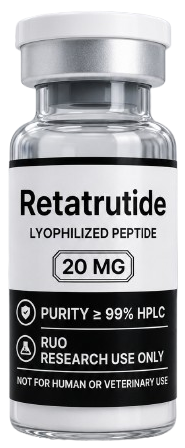
Retatrutide 20mg is an investigational research material studied in laboratory and clinical-development settings for its activity across multiple metabolic receptor pathways. Its scientific interest centres on a distinctive multi-receptor profile involving glucagon-like peptide-1 (GLP-1), glucose-dependent insulinotropic polypeptide (GIP) and glucagon receptors. For Australian laboratories investigating metabolic signalling, receptor pharmacology and peptide biology, clearly documented material is essential for reproducible experimental work.
Batch Tested
Certificate of Analysis
Batch PA-0388 — 20mg
View COA
Research Grade Quality
Independently Tested
Retatrutide 20mg
$225.99
Size / Strength
HPLC Verified
COA Included
Fast Dispatch
Discreet Shipping
100% Quality Guarantee
Every batch of Retatrutide 20mg is independently third-party tested. 30-day money-back guarantee — no questions asked.
Retatrutide 20mg – Research Overview
Research Highlights
- Independent Laboratory Tested
- Batch-Specific Certificate of Analysis (COA)
- Australia-Wide Dispatch
- Research Use Only (RUO)
What Is Retatrutide 20mg?
Retatrutide 20mg is a laboratory presentation of retatrutide, a synthetic investigational peptide developed for research into metabolic receptor signalling. Retatrutide is scientifically notable because a single molecule has been engineered to interact with three receptor systems: GLP-1, GIP and glucagon receptors.
This triple-receptor activity distinguishes Retatrutide 20mg research from investigations involving compounds designed primarily around one receptor pathway. Researchers can examine how simultaneous receptor activity influences downstream signalling, metabolic regulation and other measurable biological responses under controlled experimental conditions.
Retatrutide originated from pharmaceutical research exploring whether multiple metabolic signalling pathways could be incorporated into one molecular design. Published investigations have subsequently examined its pharmacology and biological effects, including controlled human clinical studies. These studies do not, however, change the regulatory status of laboratory material sold for research purposes.
The 20mg designation refers to the nominal quantity of peptide material associated with the product presentation. It should not be interpreted as a recommended dose, protocol or instruction for administration.
For Australian research organisations, Retatrutide 20mg should therefore be understood as an investigational research material rather than a medicine intended for routine therapeutic use.
Molecular Characteristics of Retatrutide 20mg
Retatrutide is a synthetic peptide engineered to produce agonist activity at GLP-1, GIP and glucagon receptors. Its molecular architecture has been deliberately modified to support the pharmacological characteristics required for experimental investigation.
Unlike a short, unmodified laboratory peptide, retatrutide incorporates structural features designed to influence receptor activity and molecular persistence. This makes analytical identity verification particularly important.
Retatrutide 20mg research material is commonly presented as a lyophilised powder. Lyophilisation removes water under controlled conditions, producing a dry material that is more suitable for storage and transport than many peptide solutions.
Researchers should distinguish between nominal vial content, chemical identity and analytical purity. These are separate specifications and should be documented appropriately.
Retatrutide 20mg Product Specifications
Actual analytical values should always be taken from the Certificate of Analysis (COA) supplied for the specific Retatrutide 20mg batch rather than from a general product description.
Why Researchers Study Retatrutide 20mg
Scientific interest in Retatrutide 20mg is driven primarily by its multi-receptor pharmacology.
Triple-Receptor Signalling
GLP-1, GIP and glucagon belong to an interconnected group of peptide-hormone signalling systems involved in metabolic physiology. Each receptor has its own tissue distribution, signalling behaviour and downstream biological effects.
Retatrutide provides researchers with an opportunity to examine these pathways through a single engineered molecule rather than studying each receptor exclusively in isolation.
GLP-1 Receptor Research
GLP-1 receptor signalling is extensively studied in metabolic biology. Experimental work investigates receptor activation, intracellular signalling, endocrine responses and interactions with nutrient-related physiological pathways.
Retatrutide 20mg provides a research material through which GLP-1 receptor activity can be considered as one component of a broader multi-agonist profile.
GIP Receptor Research
GIP is another incretin-related signalling molecule. GIP receptor research explores cellular responses associated with nutrient sensing, endocrine signalling and metabolic regulation.
The inclusion of GIP receptor activity contributes to the scientific distinction between retatrutide and compounds designed around GLP-1 activity alone.
Glucagon Receptor Research
The glucagon receptor represents the third major component of retatrutide's pharmacological profile. Glucagon signalling is investigated in relation to hepatic metabolism, energy regulation and broader metabolic homeostasis.
For researchers, this creates an interesting experimental question: how does concurrent activity across three receptor systems differ from activity directed towards one or two?
Receptor Pharmacology and Cellular Signalling
Laboratory investigations may examine receptor binding, concentration-response relationships, downstream second-messenger activity and pathway-specific cellular responses.
These studies can help scientists understand how molecular design influences receptor pharmacology.
Experimental Models
Retatrutide has been investigated through preclinical models as well as controlled clinical-development programmes. Such research contributes to understanding its pharmacodynamic properties and multi-receptor mechanism.
The purpose of laboratory research is to characterise these mechanisms objectively. Experimental observations should not be converted into therapeutic claims for Retatrutide 20mg Research Use Only material.
Researchers comparing different investigational compounds should evaluate molecular mechanism rather than assuming that peptides with overlapping research areas are interchangeable.
Manufacturing and Quality Standards for Retatrutide 20mg
Producing a complex synthetic peptide requires controlled synthesis, purification and analytical verification. Documentation is especially important because visual inspection cannot establish molecular identity or purity.
Peptide Synthesis
Synthetic peptide manufacturing generally relies on controlled peptide-synthesis techniques in which amino-acid building blocks are assembled according to a defined molecular sequence.
Modern peptide production frequently uses Solid Phase Peptide Synthesis (SPPS) or related manufacturing strategies. During SPPS, amino acids are progressively coupled while the developing peptide remains associated with a solid support.
For structurally modified peptides, additional manufacturing steps may be required to establish the intended molecular architecture.
Purification
Crude material produced during synthesis can contain the target compound alongside truncated sequences, synthesis-related by-products and other impurities.
Purification therefore forms a separate and essential manufacturing stage.
Chromatographic techniques can separate the intended peptide from unwanted components based on their physicochemical properties.
Lyophilisation
Following purification and preparation, material may undergo freeze-drying to produce the final lyophilised presentation. Controlled lyophilisation assists with physical stability and allows the product to be supplied as dry laboratory material.
Batch Traceability
Every Retatrutide 20mg production batch should have a traceable identifier connecting the physical material with relevant quality records.
A simplified workflow looks like this:
Raw Materials → Peptide Synthesis → Purification → Analytical Testing → Lyophilisation → Batch Documentation → Quality Review → Release
Batch traceability allows researchers to associate experimental material with its corresponding analytical records.
For laboratories comparing suppliers of Research Peptides Australia, manufacturing claims should be supported by verifiable quality documentation rather than marketing terminology alone.
Our guides to Third-Party Laboratory Testing and How to Read a Certificate of Analysis explain these quality controls in greater detail.
Retatrutide 20mg Is Research Use Only
Research Use Only (RUO) is more than a label. It defines the intended purpose of the supplied material.
Retatrutide 20mg offered as RUO material is intended for legitimate scientific, analytical and laboratory investigation. It is not supplied as a medicine, pharmacy product or therapeutic preparation.
This distinction is particularly important in Australia, where therapeutic products and experimental laboratory materials operate under different regulatory frameworks.
Researchers should not interpret published clinical research into retatrutide as changing the status of a research-only product. A compound being investigated in clinical development does not mean laboratory material sold online has been approved as a therapeutic product.
Responsible organisations should maintain clear separation between experimental materials and substances authorised for clinical use.
Institutions purchasing Laboratory Peptides Australia should also apply their own procurement, ethics, biosafety and laboratory-governance requirements where relevant.
Why Choose Peptides Australia for Retatrutide 20mg Research Material?
Scientific procurement should begin with documentation.
Peptides Australia focuses on providing researchers with clear product identification, batch traceability and accessible analytical information for research materials supplied within Australia.
Batch-Specific Documentation
Where a batch-specific COA is supplied, researchers can associate the analytical report with the corresponding Retatrutide 20mg lot rather than relying on a generic purity statement.
Independent Laboratory Testing
Independent analytical testing can provide an additional layer of documentation concerning the characteristics of research material. Researchers should review the methods and results rather than relying solely on a headline purity percentage.
Traceable Retatrutide 20mg Batches
Batch identification supports experimental record keeping and allows laboratories to document which material was used in a particular study.
Secure Packaging and Australian Dispatch
Research materials require appropriate packaging to minimise avoidable exposure or physical damage while in transit. Australia-wide dispatch also reduces the logistical complexity associated with international procurement.
For researchers purchasing research peptides in Australia, checking the Certificate of Analysis, batch identity and available independent testing documentation before selecting laboratory materials is a sensible procurement practice.
As an Australian Peptide Supplier, Peptides Australia aims to make these quality records accessible while maintaining a clear Research Use Only position.
Research Use Only
This product is intended solely for laboratory research purposes. Not for human consumption.
Retatrutide 20mg – Storage & Handling
Retatrutide 20mg Storage and Laboratory Handling
Peptides are chemically sensitive research materials. Temperature, moisture, light and repeated environmental exposure may affect their integrity over time.
Retatrutide 20mg should be stored according to the conditions documented for the supplied research material. Laboratory personnel should refer to the product specification, accompanying documentation and their institution's validated procedures rather than assuming that every peptide has identical storage requirements.
Good laboratory practice includes maintaining appropriate environmental conditions, minimising unnecessary exposure to moisture and light, and keeping containers securely closed.
Transport conditions also deserve consideration. Packaging should protect the material from avoidable physical damage and environmental exposure during Australia-wide dispatch.
For long-term experimental programmes, laboratories should document:
- date received
- batch number
- storage location
- relevant storage conditions
handling history; and
experimental allocation.
These records support traceability when results are reviewed later.
Researchers can consult Peptide Storage Guidelines for broader information about maintaining laboratory peptide materials.
Retatrutide 20mg – Technical Specifications
Every batch of Retatrutide 20mg is independently analysed before dispatch. The values below describe the current research batch.
| Product Name | Retatrutide 20mg |
|---|---|
| CAS Number | 2381089-83-2 |
| Molecular Formula | C221H342N46O68 |
| Molecular Weight | 4731.33 g/mol |
| Quantity / Strength | 20mg |
| Purity | ≥ 99% (HPLC) |
| Form | Lyophilised Powder |
| Appearance | White Lyophilised Powder |
| Batch Number | PA-0388 |
| Storage Conditions | 2°C to 8°C (Refrigerated) |
| Shelf Life | 24 months from manufacture when stored as specified |
| Category | Weight Loss |
| Intended Use | Research Use Only — not for human consumption |
Retatrutide 20mg – Certificate of Analysis
Every batch of Retatrutide 20mg is independently tested before dispatch. View the full COA for the current batch below.
Certificate of Analysis (COA)
Batch Number PA-0388
≥ 99%
Purity
HPLC
Confirmed
Identity
Mass Spec
Pass
Heavy Metals
ICP-MS
Purity Testing and the Certificate of Analysis
Analytical testing helps answer two fundamentally different questions:
Is the expected compound present?
and
How much of the analysed material corresponds to the principal detected component?
No single analytical method should automatically be interpreted as answering every quality question.
HPLC Testing
High-Performance Liquid Chromatography separates components within a sample according to their interactions with a chromatographic system.
An HPLC chromatogram can show a principal peak and additional detected components. The resulting data are useful for assessing chromatographic purity under the stated analytical conditions.
This is why claims concerning HPLC Tested Peptides should ideally be accompanied by actual batch documentation.
LC-MS and Mass Spectrometry
Mass spectrometry provides information about molecular mass and can support identity assessment. When chromatography is coupled with mass spectrometry, researchers obtain complementary information about separation and molecular characteristics.
HPLC purity and mass confirmation should not be treated as interchangeable measurements.
See HPLC vs LC-MS Testing for a more detailed explanation of their respective roles.
Reading a Retatrutide 20mg COA
A batch-specific Certificate of Analysis may contain:
- product or sample identification
- batch or lot number
- analytical method
- test date
- chromatographic purity result
- mass or identity information
specification or acceptance criteria, where applicable; and
laboratory or report identification.
Researchers should verify that the COA corresponds to the actual batch being supplied.
This matters because a generic analytical report from a different lot provides limited evidence about the material currently under investigation.
Research Disclaimer
For Research Use Only — Not for Human Consumption
Retatrutide 20mg is supplied exclusively for Research Use Only (RUO). It is not supplied or approved in Australia for therapeutic, diagnostic or human use. The material is intended solely for legitimate laboratory, analytical and scientific research. Product information on this page is provided for educational and research purposes and must not be interpreted as medical advice, dosage guidance or instructions for self-administration.
- Not for human or veterinary use
- No claims are made regarding safety or efficacy in humans
- Must be handled with appropriate laboratory safety equipment
- Purchaser assumes all responsibility for legal, compliant use
Retatrutide 20mg – Frequently Asked Questions
Researchers Also Purchase
Why Researchers Choose Us
Research-Grade Quality. Trusted by Researchers Across Australia.
Learn About Our QualityDiscreet Packaging
Fast Australia-Wide Delivery
Expert Support
30-Day Money Back