
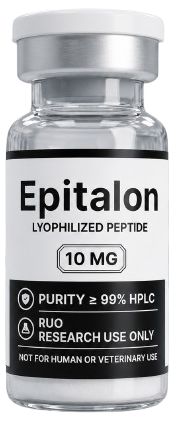
Epitalon is an experimental tetrapeptide molecule studied within the research fields of peptide chemistry, molecular biology, and studies of aging. Researchers conduct experiments with Epitalon as an experimental peptide to gain insight into molecular signaling, peptide properties, cell processes, and biological mechanisms in laboratory conditions.
Certificate of Analysis
Batch PA-0111 — 10mg
View COA
Research Grade Quality
Independently Tested
Epitalon
$75.99
Size / Strength
HPLC Verified
COA Included
Fast Dispatch
Discreet Shipping
100% Quality Guarantee
Every batch of Epitalon is independently third-party tested. 30-day money-back guarantee — no questions asked.
Epitalon – Research Overview
Experiments and studies with Epitalon are aimed at understanding peptide properties, molecular interactions, and biochemical mechanisms and not the clinical applications and approved medical uses of the compound.
The advances in peptide studies contribute greatly to further discoveries in biotechnology, analytical chemistry, and life sciences by providing researchers with defined molecular research reagents.
At Peptides Australia, Epitalon 10mg is available exclusively as a laboratory chemical for research use only. Every batch of Epitalon is supplied with quality documentation including information about testing and batch-specific Certificates of Analysis (COA) that help researchers evaluate laboratory chemicals effectively.
Research Highlights
- Independent Laboratory Tested
- Batch-Specific Certificate of Analysis
- Nationwide Shipping
- Research Use Only
- HPLC Tested Peptide Material
What is Epitalon?
Epitalon is a synthetic peptide research substance used in molecular biology, peptide science, and ageing research.
The peptide is a tetrapeptide that comprises of four amino acids and has been tested as a laboratory model for investigating molecular signaling pathways.
Researching Epitalon allows scientists to learn about:
- Peptide Structure
- Molecular Interactions
- Signaling Pathways
- Gene-related Research Mechanisms
- Biochemical Processes
Like all other research peptides, Epitalon is researched in laboratory settings and is not available as an approved medicine or consumer item.
Scientific Background of Epitalon Research
Peptides play an essential role in biotechnology and molecular biology research since their small molecular structure allows researchers to explore particular biological interactions.
Research on peptides is used to study:
- Relationships between amino acid sequences
- Molecular stability
- Chemical properties
- Interactions of biological pathways
Model synthetic peptides give scientists an opportunity to analyze particular molecular properties. Epitalon is one of the specialized peptide models used for molecular aging and cellular biology research.
Peptide classification
Epitalon belongs to the class of synthetic tetrapeptides research compounds. The tetrapeptide consists of four amino acids bound by peptide bonds. The properties of a peptide include:
- Amino acid sequence
- Molecular structure
- Chemical properties
- Environmental factors
To analyze the properties of a peptide, the following laboratory methods can be used:
- High-Performance Liquid Chromatography (HPLC)
- Liquid Chromatography–Mass Spectrometry (LC-MS)
Pineal Peptide Research Background
The pineal gland and corresponding molecular pathways are one of the fields of biological research.
Scientists conduct studies to learn more about:
- Cell signaling
- Molecular communications
- Mechanisms of biological timing
- Biochemical pathways
Epitalon is one of the synthetic peptides studied in this wider field of molecular biology.
Investigations in science are aimed at analysis of molecular properties instead of medical effects proved.
Molecular Characteristics of Epitalon
Understanding peptide structure is an essential part of laboratory research.
Epitalon has a defined molecular composition that researchers evaluate through analytical testing.
Stability Considerations
The stability of peptides is also affected by external environmental factors. These include:
- Exposure to temperature
- Levels of moisture
- Exposure to light
- Conditions under which the peptide is packaged
- Duration of storage
Appropriate storage conditions help in maintaining the properties of the research materials. The following educational materials are available for researchers:
- Peptide Purity
- Peptide Storage Tips
- Reading a Certificate of Analysis
Why Researchers Study Epitalon
The reason why scientists study Epitalon is because of its use as a peptide research model in the study of molecular biology.
Research in laboratories is done through the investigation of:
- Structure of peptides
- Molecular signaling pathways
- Cell communication
- Genetic-related research mechanisms
Chronobiology and Molecular Signaling Research
Chronobiology refers to the science of biological timing and biological rhythm and the molecular processes that affect them.
Research on chronobiology includes the study of:
- Molecular timing mechanisms
- Cell communication pathways
- Regulatory mechanisms
- Biological signal networks
Epitalon is studied under this scientific field as a peptide research model.
Cellular Ageing Research Context
Cellular ageing studies encompass a range of sciences, including molecular biology, genetics, and cellular biology.
The studies include the following:
- Cellular signaling
- Molecular pathways
- Expression patterns of genes
- Cellular structural changes
Epitalon studies help in laboratory research of peptides in the context of the above-mentioned scientific fields.
This is not an officially approved anti-ageing solution.
Telomere and Cellular Research Models
Telomeres are specialized structures found at the end of chromosomes and are widely studied in molecular biology.
Scientists study telomere related processes to learn more about:
- Chromosomal biology
- Cellular biology
- Molecular biology
- Research models in genetics
Epitalon has been investigated in scientific literature as part of general molecular biology research.
Gene Expression and Molecular Pathway Studies
Gene expression studies aim to understand how the genetic material is regulated in biological organisms.
Scientist study the following:
- Molecular pathways
- Cellular signaling
- Regulation
- Biological response
Peptide research models like Epitalon help researchers to study molecular relations in the laboratory.
Experimental Laboratory Applications
Epitalon can be examined by the means of controlled laboratory methods such as:
- Analytical chemistry
- Molecular characterisation
- Peptide interaction studies
- Biochemical analysis
The aim of these studies is to deepen scientific knowledge regarding peptide structure and molecular biology.
Manufacturing & Quality Control
The production of high quality research peptides needs controlled synthesis, analytical examination and documentation. Epitalon 10mg is synthesised as a research peptide product utilising controlled peptide synthesis methods aimed at obtaining consistent and traceable laboratory material. Controlled peptide manufacturing process usually involves the following stages:
- Preparation of peptide sequence
- Synthesis control
- Purification
- Analysis
- Lyophilisation
- Batch documentation
Such a process allows researchers to evaluate laboratory peptide products based on documentation of their quality characteristics.
Solid Phase Peptide Synthesis (SPPS)
Solid Phase Peptide Synthesis (SPPS) is a common method of producing peptide compounds. It allows assembling amino acids into a specific peptide sequence. The common manufacturing process includes the following steps:
- Selection of peptide sequence
- Controlled amino acid coupling
- Elimination of synthesis-associated material
- Peptide compound purification
- Analytical examination
- Lyophilisation procedure
- Batch documentation
Purification Process
Purification follows after synthesis and is the process of separating the required peptide compound from the undesired substances.
Purification can assist in eliminating:
- Incomplete peptide chains
- Unwanted synthesis chemicals
- Other similar molecules
- Byproducts of manufacture
The purification process helps achieve analytical consistency and allows researchers to have quality documentation for analysis.
Lyophilisation Process
After purification and analysis, Epitalon undergoes lyophilisation. Lyophilization is the process of freeze drying which is usually utilized for research peptide chemicals. This method decreases the moisture content while allowing consistency during storage and transportation. Advantages of lyophilized research peptides include:
- Lower exposure to moisture
- Greater storage consistency
- Laboratory documentation ease
- Consistent material handling
Researchers should utilize proper laboratory procedures when handling lyophilized peptides.
Research Use Only (RUO)
Epitalon 10 mg from Peptides Australia is distributed strictly as a Research Use Only (RUO) laboratory material.
It is only suitable for:
- Scientific research
- Laboratory analysis
- Research education
- Experimental studies
Epitalon is not registered in Australia for treatment, diagnostics, veterinary, cosmetic or human use.
Research Materials and Approved Products
Research peptides and approved drugs are made for different purposes. Approval process includes the following steps:
- Assessment of safety
- Clinical testing
- Evaluation of production
- Approval of application
Research peptides are supplied for scientific research purposes only.
Responsible Laboratory Research
It is the duty of those who work with RUO materials to make sure that there is compliance with:
- Institutional guidelines
- Laboratory safety procedures
- Research governance standards
- Australian law
Epitalon must only be used in appropriate laboratory settings by competent people.
Why Choose Peptides Australia?
Good peptide research requires access to reliable information, quality data, and laboratory materials. Peptides Australia assists researchers by offering information intended for:
- Universities
- Biotechnological firms
- Research laboratories
- Scientific establishments
Batch-Specific Certificate of Analysis
Batch-specific COAs offer analytical information on products. This helps in:
- Laboratory documentation
- Verification of materials
- Research traceability
Independent Laboratory Testing
Analytical testing offers researchers information on:
- Peptide identification
- Purity features
- Consistency of batches
HPLC Tested Peptides
HPLC testing offers analytical information about peptide purity and composition. Researchers are able to refer to the testing documentation while analyzing laboratory peptide materials.
Secure Packaging
Proper packaging is important in protecting lyophilised research materials.
Australia-Wide Dispatch
Timely dispatch ensures access for:
- Research establishments
- Universities
- Biotechnological firms
- Scientific laboratories
Researchers who intend to purchase Epitalon in Australia need to look at product specifications, availability of Certificate of Analysis, information on analytical testing, and Research Use Only classification of laboratory peptides.
Research Use Only
This product is intended solely for laboratory research purposes. Not for human consumption.
Epitalon – Storage & Handling
Storage & Laboratory Procedures
It is important for scientists to store and handle peptides in such a way to maintain material quality.
Epitalon is provided in lyophilised form and should be handled appropriately.
Temperature Requirements
When handling peptides, scientists should ensure the proper temperature control.
Some of the key factors to be considered are:
- Storage at appropriate temperature
- No frequent changes in temperature
- Transport of materials
Moisture Protection
Lyophilized Peptide Material should be safeguarded from overexposure to moisture.
Good laboratory practice could include:
- Container seals should be maintained correctly
- Protection from excessive humidity
- Storage instructions from the supplier
Light Protection
Scientists should also keep in mind the need to protect peptide materials from long-term light exposure. Controlled storage conditions help maintain the properties of research material.
Laboratory Documentation
Scientific organizations usually have documentation about the following:
- Batches information
- Storage conditions
- Properties of the product
- Research procedures
Proper documentation helps with laboratory quality management.
Scientists can look into:
- Guidelines on Storage of Peptides
- How to Read Certificate of Analysis
- Laboratory Quality Control
Epitalon – Technical Specifications
Every batch of Epitalon is independently analysed before dispatch. The values below describe the current research batch.
| Product Name | Epitalon |
|---|---|
| CAS Number | 307297-39-8 |
| Molecular Formula | C₁₄H₂₂N₄O₉ |
| Molecular Weight | 390.35 g/mol |
| Quantity / Strength | 10mg |
| Purity | ≥ 99% (HPLC) |
| Form | Lyophilised Powder |
| Appearance | White Lyophilised Powder |
| Sequence | Ala-Glu-Asp-Gly |
| Batch Number | PA-0111 |
| Storage Conditions | 2°C-8°C (Refrigerated) |
| Category | Longevity & Anti-Aging |
| Intended Use | Research Use Only — not for human consumption |
Epitalon – Certificate of Analysis
Every batch of Epitalon is independently tested before dispatch. View the full COA for the current batch below.
Certificate of Analysis (COA)
Batch Number PA-0111
≥ 99%
Purity
HPLC
Confirmed
Identity
Mass Spec
Pass
Heavy Metals
ICP-MS
| COA Information | Purpose |
|---|---|
| Product Name | Confirms peptide identification |
| Batch Number | Supports traceability |
| Purity Results | Provides analytical evaluation |
| Testing Method | Identifies laboratory techniques |
| Identity Testing | Supports molecular confirmation |
| Quality Review | Documents assessment |
Batch Traceability and Quality Documentation
Batch traceability is an essential part of a responsible research peptide supply chain.
Documentation concerning Epitalon will include:
- Identification of the product
- Batch number
- Analysis information
- Specifications of quality
- Storage instructions
Good record keeping assists universities, biotechnology companies, and research facilities in documenting laboratory materials.
Purity Testing & Certificate of Analysis (COA)
Analytical testing supplies researchers with information on peptide identity, purity features, and quality criteria. Prior to choosing laboratory peptides, researchers typically consider the following data:
- Purity data
- Analytical testing results
- Peptide identification
- Batch data
High-Performance Liquid Chromatography (HPLC)
High-Performance Liquid Chromatography (HPLC) is one of the most frequently used analytical techniques for peptide purity evaluation. HPLC separation of sample components results in the creation of the chromatographic spectrum for further analytical examination. HPLC testing of Epitalon research materials can provide the following information:
- Purity %
- Composition of samples
- Related substances
- Consistency of batch
HPLC testing is widely used in the field of peptide chemistry, biotechnology, and academic research laboratories. Researchers who are interested in analytical techniques can explore:
- Understanding Peptide Purity
- HPLC vs LC-MS Testing
- Third-Party Laboratory Testing
LC-MS Identity Testing
Liquid Chromatography–Mass Spectrometry (LC-MS) is widely used in peptide identity identification.
With LC-MS analysis, researchers can assess:
- Molecular weight
- Peptide identity expected
- Structure
Combination of different analytical techniques allows obtaining more information on research peptide materials.
Certificate of Analysis Explained
A Certificate of Analysis (COA) is a batch-specific quality document containing analytical information about a research peptide.
A typical COA may include:
COA permits scientists to analyse laboratory material specifications prior to conducting their research.
Scientists looking to purchase Epitalon in Australia are advised to consult the COA documentation, analytical data, and the Research Use Only status of laboratory peptides.
Research Disclaimer
For Research Use Only — Not for Human Consumption
This content is provided for educational, scientific and research-information purposes only. It does not provide medical advice, treatment recommendations or personal dosage instructions. Available evidence concerning Epitalon includes preclinical research and limited clinical investigations. Further research is required to better understand its safety, pharmacology and potential efficacy for specific research applications.
- Not for human or veterinary use
- No claims are made regarding safety or efficacy in humans
- Must be handled with appropriate laboratory safety equipment
- Purchaser assumes all responsibility for legal, compliant use
References
5 sources- 1Khavinson VK, Bondarev IE, Butyugov AA. Epithalon Peptide Induces Telomerase Activity and Telomere Elongation in Human Somatic Cells. Bulletin of Experimental Biology and Medicine. 2003;135(6):590-592.PubMed: https://pubmed.ncbi.nlm.nih.gov/12937682/
- 2Khavinson V, Diomede F, Mironova E, et al. AEDG Peptide (Epitalon) Stimulates Gene Expression and Protein Synthesis during Neurogenesis: Possible Epigenetic Mechanism. Molecules. 2020;25(3):609.MDPI: https://www.mdpi.com/1420-3049/25/3/609
- 3Araj SK, et al. Overview of Epitalon-Highly Bioactive Pineal Tetrapeptide with Promising Properties. International Journal of Molecular Sciences. 2025.PubMed Central: https://pmc.ncbi.nlm.nih.gov/articles/PMC11943447/
- 4Al-Dulaimi S, et al. Epitalon Increases Telomere Length in Human Cell Lines through Telomerase Upregulation or ALT Activity. Biogerontology. 2025.PubMed: https://pubmed.ncbi.nlm.nih.gov/40908429/
- 5Australian Government, Therapeutic Goods Administration (TGA). Concerns Regarding the Public Health Risks Associated with Unapproved Peptide Products. Therapeutic Goods Administration. 19 June 2026.TGA: https://www.tga.gov.au/news/media-releases/concerns-regarding-public-health-risks-associated-unapproved-peptide-products
Citations are provided for research reference and open in a new tab. Listing a study does not imply it evaluated this specific product.
Epitalon – Frequently Asked Questions
Researchers Also Purchase


Why Researchers Choose Us
Research-Grade Quality. Trusted by Researchers Across Australia.
Learn About Our QualityDiscreet Packaging
Fast Australia-Wide Delivery
Expert Support
30-Day Money Back